feature article archive
Subscribe Now

Meet UVVM: The World’s #1 VHDL Verification Methodology

I’m happy (albeit puzzled) to tell you that things seem to be getting better with respect to verifying FPGA, ASIC, and system-on-chip (SoC) designs. The reason I say this is that the last time I turned my attention to this arena, people were saying that the design and verification phases of a complex device consumed 30% and 70% of the total development time, respectively. By comparison, someone recently informed me that these numbers are now more like 50% and 50%, which means either we’ve become better at doing verification or worse at doing design.

As … Read More → "Meet UVVM: The World’s #1 VHDL Verification Methodology"

FPGA Saves the World (Sort of), Part 2

On September 26 of this year, the DART (Double Asteroid Redirection Test) spacecraft slammed into the moonlet/asteroid Dimorphos and vaporized itself into an expanding plume of atomized debris. Fifteen days prior, DART had released LICIAcube – the Light Italian CubeSat for Imaging Asteroids – which was hitchhiking along for the ride. However, LICIAcube wasn’t a joyrider. It had an important mission: to capture images of DART’s impact with Dimorphos and subsequent vaporization from a safe distance – about 50 kilometers from Dimorphos – and then to image the other, unseen side of Dimorphos after the impact. DART would never … Read More → "FPGA Saves the World (Sort of), Part 2"

FPGA Saves the World (Sort of)

On Sept. 26, 2022, at 7:14 pm EDT, NASA’s DART (Double Asteroid Redirection Test) spacecraft slammed into an asteroid moonlet called Dimorphos, which orbits around a larger asteroid named Didymos. Dimorphos, roughly 163 meters in diameter, was not threatening anything. It was minding its own business, circling Didymos, when a spacecraft from Earth, roughly the size of a vending machine, rudely crashed into the mini moon. The DART mission, launched on November 24, 2021, is the world’s first test of a potential planetary defense mechanism against asteroids that might potentially hit the Earth and cause tremendous damage with massive loss … Read More → "FPGA Saves the World (Sort of)"

Say “Howdy” to the Hawk AI Integrated Mini-ITX System

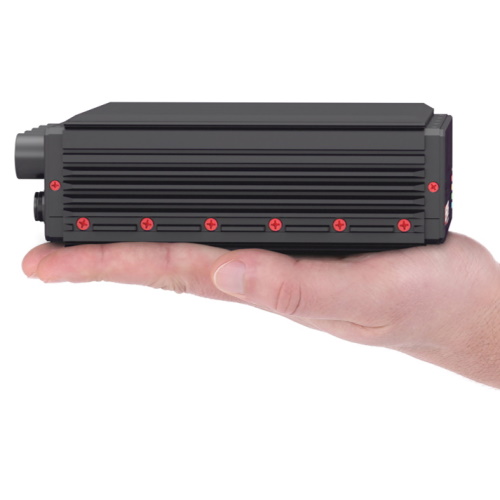
When a lot of people hear the name Flex Logix, their knee-jerk reaction is to think eFPGA (“Embedded FPGA”). While it is certainly true that the guys and gals at Flex Logix have a commanding presence in eFPGA space (where no one can hear you scream), they are also making waves in artificial intelligence (AI) inferencing space (where AI systems will hear you scream).

As an aside, on the off chance you didn’t see the movie, “In space no one can hear you scream” is the iconic tagline of … Read More → "Say “Howdy” to the Hawk AI Integrated Mini-ITX System"

Cars and Robots with Smart Skins That Can Feel

I’ve made no secret of the fact that I love science fiction. Thinking about it, you probably wish I’d stop waffling on about this topic. If so, I’m afraid that you’re out of luck (sorry). Ever since I first read I Robot and The Rest of the Robots by Isaac Asimov when I was a young lad, I totally bought into the concept that we would one day create humanoid-shaped and other intelligent robots. … Read More → "Cars and Robots with Smart Skins That Can Feel"

Intel’s Gamble on oneAPI and DPC++ for Parallel Processing and Heterogeneous Computing: An Interview with Intel’s James Reinders

Intel is placing many big bets on semiconductor process improvements, building new fabs and manufacturing plants around the world, new packaging technologies, and even software. One of those bets, or perhaps a group of bets, is oneAPI and Data Parallel C++ (DPC++), which are an open, cross-architecture programming model that frees developers to use a single code base across multiple architectures and a parallel-programming variant of C/C++ based on Khronos SYCL. These bets are designed to make it easier for software developers to create relatively portable code for systems based on heterogeneous computing architectures.</ … Read More → "Intel’s Gamble on oneAPI and DPC++ for Parallel Processing and Heterogeneous Computing: An Interview with Intel’s James Reinders"

Another Huge Step Forward for Machine Vision

Captain's log, stardate 22276.3: I’m happy and sad, baffled and bewildered, and dazed and confused. The day is yet young, so everything is pretty much par for the course. One reason I’m happy is that the SyFy channel recently started a new series called Reginald the Vampire. Although this may not be the best vampire show ever, it’s an interesting take on things, and I’m looking forward to seeing how it pans out. … Read More → "Another Huge Step Forward for Machine Vision"

Movellus Intelligent Clock Network IP Trades Transistors for Lower Timing Skew and Better IC Design Margins

Power distribution and clocks are the essential infrastructure of chip design. Since the earliest days of the integrated circuit, power has been distributed on top of the chip through metal traces that are intermixed with the signal traces. Multiple manufacturers are now investigating back-side power distribution, which require through-silicon vias. Meanwhile, clock distribution hasn’t changed much, but Movellus would like to change that with its new, intelligent approach to on-chip clock networks.

Taking one step back, our industry is wedded to synchronous logic design. Although a few design teams … Read More → "Movellus Intelligent Clock Network IP Trades Transistors for Lower Timing Skew and Better IC Design Margins"

Can Any Emerging Memory Technology Topple DRAM and NAND Flash?

During its recent quarterly financial update on July 28, Intel announced that it was winding down its Optane Persistent Memory business using what amounts to a footnote in its earnings report. (See “Optane, We Hardly Knew Yeh.”) The writing had been on the wall. There was one fab making production Optane chips based in Lehi, Utah owned by Micron, and Micron sold the fab to Texas Instruments earlier in the year. You can bet that Texas … Read More → "Can Any Emerging Memory Technology Topple DRAM and NAND Flash?"

featured blogs
Jan 29, 2026
Most of the materials you read and see about gyroscopic precession explain WHAT happens, not WHY it happens....