feature article archive
Subscribe Now

When Is the Chip Supply Coming Back?

If your new car doesn’t come with the radio you wanted, blame Japan. Or Korea. Or the United States, UK, Brazil, The Netherlands, Taiwan, France, or (like Monty Python) the Belgians. It’s all their fault. 

Your shiny new “German” car will include assemblies and components from all over the world. Indeed, there’s really no such thing as an American car or Japanese car or – heaven help us – Italian car anymore. They’re all global, with Read More → "When Is the Chip Supply Coming Back?"

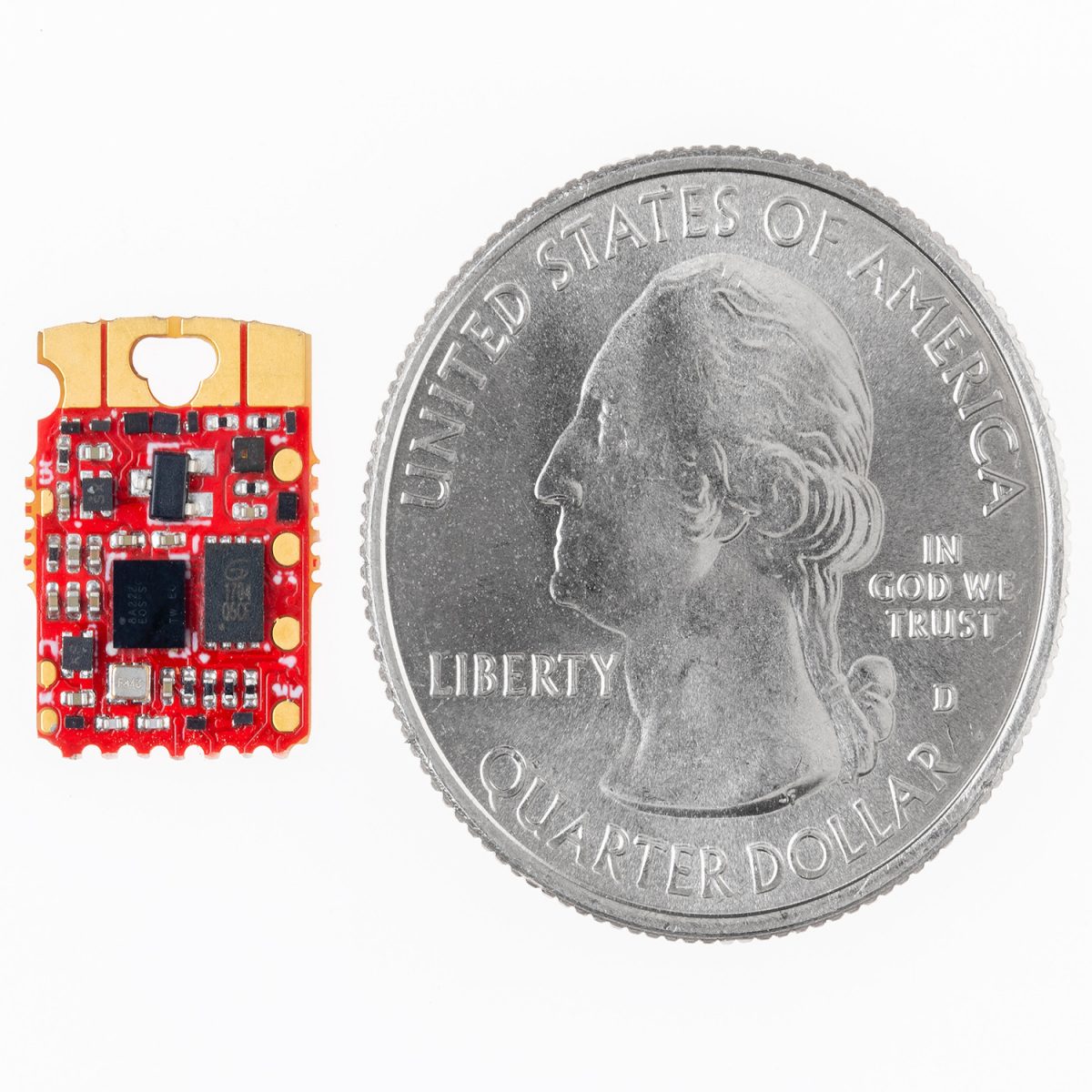
Radar Sensors on a Chip

Radar predates me by quite a bit. The word conjures up black-and-white images of WWII bombers, huge ground arrays, and stickers warning you not to stand too close to the equipment lest you get cooked. 

Well, you can ignore that last part. In fact, you’ll want to stand in front of today’s modern radar. You may not have a choice, in fact. Radar just ain’t what it used to be. It’s now tiny, affordable, and actually improvesRead More → "Radar Sensors on a Chip"

Securing RISC-V-Based Systems

In just a moment we are going to cogitate and ruminate over the question of how to secure our RISC-V-based systems, but first…

Deep in the mists of time in that awesome decade we used to call the 1970s, although I was in my teens and many exciting things were occurring to capture my attention, I still remember my excitement when 8-bit microprocessors began to arrive on the scene. This started in November 1972 with the Intel 8008, which was essentially an 8-bit version of the 4-bit 4004. Containing approximately 3,300 transistors, the 8008 was the first microprocessor to be supported by … Read More → "Securing RISC-V-Based Systems"

How To Implement Virtual Memory, Part 4

Fiddly little bit-twiddling. Nobody likes it, but if you’re writing boot ROMs, device drivers, or low-level system functions, you’ve got to roll your sleeves up and do it. That’s especially true when you’re tweaking your processor’s MMU to create and enable virtual memory, paging, or protections. To make life easier, we herewith present Little Chunks o’ Code to help with that. 

Most of what we’ve discussed so far applies to most any processor, but today’s code snippets are obviously x86-specific. The same … Read More → "How To Implement Virtual Memory, Part 4"

How To Implement Virtual Memory, Part 3

We saw earlier how to use the MMU in your x86 processor (or almost any other modern processor) to space-shift your system’s memory. You can make memory appear to move around in the address space, you can make it magically appear where there isn’t any memory, and you can make it look like you’ve got more memory than you actually do, even making a tiny block of RAM look like a … Read More → "How To Implement Virtual Memory, Part 3"

SWA Stands for Stupendous, Wizard, and Awesome

Many of today’s electronic systems feature multiple printed circuit boards (PCBs) and/or modules. (For the remainder of this column, unless such interpretation is inconsistent with the context, we will assume the term “board” to embrace the term “module.”) Not surprisingly, the system’s designers often wish to pass data back and forth from board to board.

Oftentimes, these inter-board signals involve relatively low-speed data transfer via general-purpose input/output (GPIO) pins or low-bandwidth serial interfaces like I2C (inter-integrated circuit) and I2S (integrated inter-IC sound bus).</ … Read More → "SWA Stands for Stupendous, Wizard, and Awesome"

How To Implement Virtual Memory, Part 2

Earlier this week we looked at one of the most useful ways to leverage virtual memory. But there are other reasons for cracking open your chip’s MMU to see what secrets it holds. One is demand paging and the other page-level protection. Both features are built in to every x86 processor, as well as most other CPUs like ARM and RISC-V. 

Best of all, these virtual memory techniques aren’ … Read More → "How To Implement Virtual Memory, Part 2"

Can Intel Succeed?

Doug had cinnamon apple oatmeal for breakfast the day he hit the championship-winning home run. 

For the big game, the team was wearing their preferred dark uniforms rather than the “away game” white ones. The game was in their home stadium. The wind was out of the southwest at about ten knots, making a nice breeze from behind home plate toward the left field fence. The team’s biggest fan, sitting in section D, row 3, seat 7, was wearing his lucky Def Leppard T-shirt, had his Snap-On Tools ball cap on … Read More → "Can Intel Succeed?"

How To Implement Virtual Memory on x86 Chips

As if it  weren’t already complex enough, x86 processors from Intel and AMD allow you to make software and memory even more indirect and complicated. This week we dive into virtual memory, demand paging, and other advanced features that x86, ARM, RISC-V, and most other modern CPUs all implement but that aren’t well understood. 

What the heck is virtual memory? It can mean a couple of different things, but usually it means you’re pretending that your system has more memory than it actually does. You’re faking … Read More → "How To Implement Virtual Memory on x86 Chips"

featured blogs
Jan 29, 2026
Most of the materials you read and see about gyroscopic precession explain WHAT happens, not WHY it happens....