feature article archive
Subscribe Now

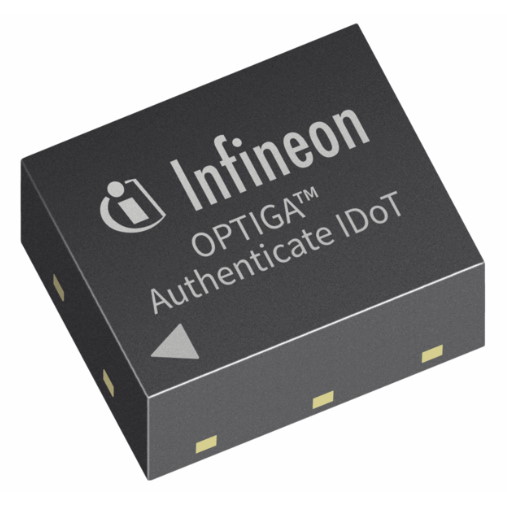
Yay! Finally! A Way to Secure the Supply Chain!

I was brought up by my parents to have a suite of core values, including the fact that it was wrong to tell porky pies and that it would be despicable beyond words to pilfer, pinch, or purloin anything from anyone. Shortly after I graduated from university, soon after I moved to commence my first job at International Computers Limited (ICL) in Manchester, England, I was burgled. The callous swine took the only thing I owned that was worth anything — a brand-new rubber-handled hammer that I’d purchased out of my first pay-packet. … Read More → "Yay! Finally! A Way to Secure the Supply Chain!"

What Is Your Invention Worth?

How much can you charge for your product? 

Anything you want, right? You can set the price arbitrarily high or low, and let your customers decide if it’s reasonable. That’s how capitalism works. 

Well, yes, sort of… That’s how an idealized, textbook version of capitalism works, but that’s not how it’s implemented in practice. In modern industrialized societies, there are certain limits placed on how you price, market, and sell your products. For example, you can’t charge different … Read More → "What Is Your Invention Worth?"

Xilinx Back in the Cost-Optimized Game

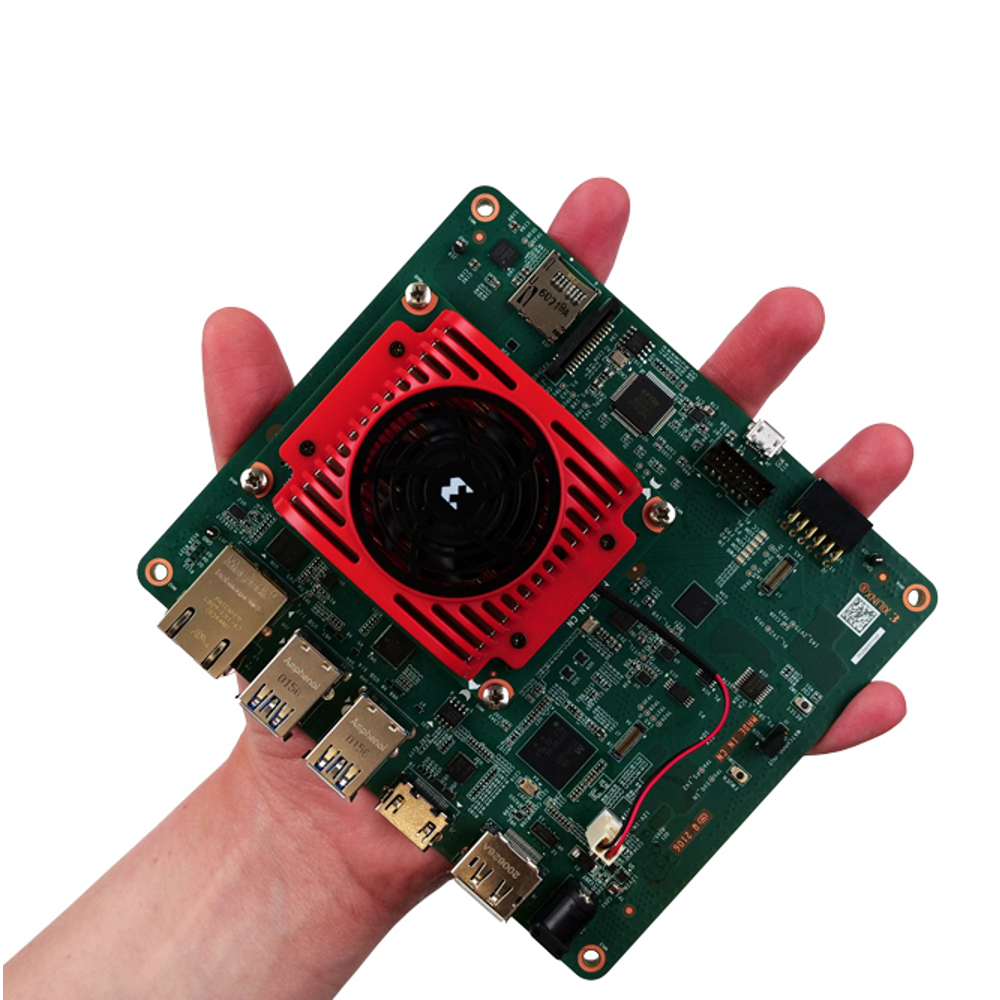
If you’d asked me a year ago (or two, or three) what I thought about Xilinx’s cost-optimized device offering, I’d have told you that I firmly believed that the company had given up on the low-cost FPGA and programmable logic market, leaving it to other, more eager competitors like Lattice Semiconductor and Microsemi/Microchip. Intel (formerly Altera) had been maintaining parity with Xilinx on low-cost abandonment, with both companies offering the same basic devices they’ve had for several years, not really putting any marketing or visible engineering energy into that market, and … Read More → "Xilinx Back in the Cost-Optimized Game"

Patent Trolls and Unintended Consequences

Everything has unintended consequences. A small change to your software ripples downstream and creates new bugs. Changing a simple capacitor causes that regulator over there to fail. VPNs (virtual private networks) were originally created to allow access to your work computer while on the road but have since become the preferred way to sidestep copyright police or geo-shift your video streams. 

Nowhere are unintended consequences more consequential than in the patent system. Patents mostly work as intended, inasmuch as they … Read More → "Patent Trolls and Unintended Consequences"

Hardware IP Cuts Memory Size, Bandwidth, and Power

Memory. What’cha gonna do with it, amirite? It’s too slow, too expensive, it takes up too much space on your board, and the supply is more volatile than a honey badger on acid. But every system needs memory, and the more processors you have, the more memory you need. Too bad there isn’t a way to, y’know, somehow make half of those problems go away. 

Wish granted. A Gothenburg Sweden–based startup called Read More → "Hardware IP Cuts Memory Size, Bandwidth, and Power"

Wait, What? MIPS Becomes RISC-V

What a long, strange trip it’s been. MIPS Technologies no longer designs MIPS processors. Instead, it’s joined the RISC-V camp, abandoning its eponymous architecture for one that has strong historical and technical ties. The move apparently heralds the end of the road for MIPS as a CPU family, and a further (slight) diminution in the variety of processors available. It’s the final arc of an architecture. 

MIPS as a company has passed through a lot of hands, most recently as part of Read More → "Wait, What? MIPS Becomes RISC-V"

Mechatronics Meets No-Code Voice AI

I’m currently running around in ever-decreasing circles shouting, “Don’t Panic!” because I’m trying to spin too many plates and juggle too many balls and I was never trained to spin and can’t juggle. Hmmm, now that I come to think about it, that’s not strictly true because I once read a book on the art of juggling and — as a result — I can juggle nine fine china plates, but only for a very short period of time.

The term mechatronics refers to an interdisciplinary branch … Read More → "Mechatronics Meets No-Code Voice AI"

QuickLogic Opens Up FPGA Design

The walled fortress is a time honored tradition in the FPGA business. Since the beginning of FPGA time, vendors of programmable logic silicon have kept a tight grip on the tool chains that are used to program their devices. If you want to do anything with a vendor’s chips, you need the vendor’s tools and the vendor’s rules. The only exceptions have been close partnerships between FPGA companies and EDA companies to provide key bits of technology that the vendor either couldn’t or didn’t feel like developing internally.

< … Read More → "QuickLogic Opens Up FPGA Design"

RISC-V Fast Tracks Simpler Extensions

One of the charming aspects of RISC-V is that it’s so… flexible. As an open-source processor specification, absolutely anyone can use it, modify it, and commercialize it. There are no licensing fees, no rules, and no compatibility test. It’s the Wild West of processors. Up to a point. 

If you want to call your processor RISC-V, however, you have to follow the rules. The name “RISC-V” is trademarked, and there are also trademarked variations, subsets, profiles, and extensions … Read More → "RISC-V Fast Tracks Simpler Extensions"

featured blogs
Jan 29, 2026
Most of the materials you read and see about gyroscopic precession explain WHAT happens, not WHY it happens....