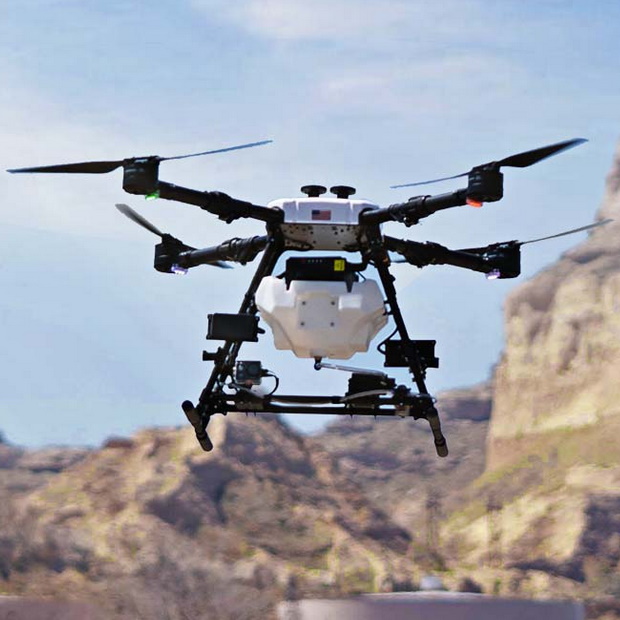
Are Agricultural Drones Poised to be the Next Big Thing?
The latest research indicates that Homo sapiens—the species to which you, your humble narrator, and all other living human beings on this planet belong (even the French)—first made its appearance sometime around 300,000 years ago (possibly on a Wednesday morning, but don’t hold me to that).
It took most of the past 300,000 years for our population to reach 1 billion people, a milestone the United Nations (UN) organization estimates occurred in 1804. It took only 123 years after that before the population doubled to 2 billion souls in 1927, and just 33 more years … Read More → "Are Agricultural Drones Poised to be the Next Big Thing?"
Lattice Strides Into the Mid-Range FPGA Arena With Avant
A History of Early Microcontrollers, Part 8: The Intel 8051
Intel introduced the successor to its 8048 microcontroller, the 8051, in 1980. It’s become the immortal microcontroller, and it was all because an applications engineer forgot to bring his wallet to work one day and asked his boss at Intel to buy lunch.
Intel announced the 8048 microcontroller in 1976. The design’s largest weakness, limited memory addressability, reared its head within the first year. In one sense, that’s a great problem to have because it suggests that customers wanted even more of a good thing. Intel sold $7 million worth of 8048 and 8748 microcontrollers … Read More → "A History of Early Microcontrollers, Part 8: The Intel 8051"
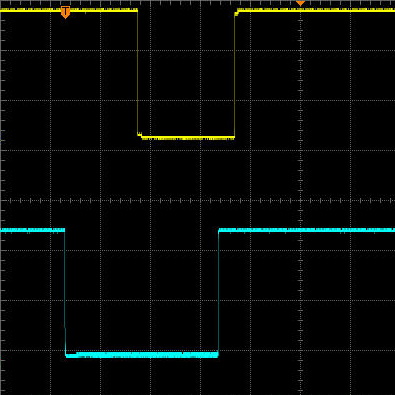
Arduino 0s and 1s, LOW and HIGH, False and True, and Other Stuff
A History of Early Microcontrollers, Part 7: The Zilog Z8
When Federico Faggin arrived at Intel in 1970, he immediately discovered that he’d stepped into a royal mess. He’d left Fairchild Semiconductor and accepted the position at Intel before being fully briefed on the custom chip set project for Busicom that would eventually become the first commercially successful microprocessor, the 4004. Faggin had developed a silicon-gate MOS process technology at Fairchild, knew it was vastly superior to the metal-gate technology everyone was using at the time, and had inferred that Intel planned to use silicon-gate technology from watching some of the thirty or so people who’ … Read More → "A History of Early Microcontrollers, Part 7: The Zilog Z8"
O-M-Gosh, I’ve Been Zeked! (Part 4)
A History of Early Microcontrollers, Part 6: The Fairchild F8 and Mostek MK3870
If Shakespeare were a technology fiction writer, he likely would have come up with something that looked very much like the story of the Fairchild F8 and Mostek 3870 microcontrollers. It’s a story full of misplaced trust, corporate seduction, shifting loyalties, misadventure, misappropriation, legal machinations, and great success followed by oblivion. A truly Shakespearean tale for Fairchild’s first microprocessor, named “F8” (Fate).
When C. Lester Hogan left Motorola’s Semiconductor Group and arrived as Fairchild Semiconductor’s newly anointed president in 1968, he walked into what he describes as “a … Read More → "A History of Early Microcontrollers, Part 6: The Fairchild F8 and Mostek MK3870"
How to Build a Multi-Billion-Transistor SoC
A History of Early Microcontrollers, Part 5: The Motorola 6801
Motorola’s Semiconductors Components Group – Motorola Semiconductor – was late to the microprocessor party in more ways than one. The company never developed a successful PMOS process technology, so it was sending custom LSI chip designs like calculator chips for customers out to other semiconductor makers such as Mostek and AMS (Advanced Memory Systems). Despite being a leader in bipolar IC manufacturing, with robust RTL, DTL, TTL, and ECL logic-chip families, the company lacked a PMOS LSI process technology, so Motorola couldn’t tackle the design and manufacture of large chips like microprocessors until circumstances forced the … Read More → "A History of Early Microcontrollers, Part 5: The Motorola 6801"