feature article archive
Subscribe Now

A History of Early Microcontrollers, Part 7: The Zilog Z8

When Federico Faggin arrived at Intel in 1970, he immediately discovered that he’d stepped into a royal mess. He’d left Fairchild Semiconductor and accepted the position at Intel before being fully briefed on the custom chip set project for Busicom that would eventually become the first commercially successful microprocessor, the 4004. Faggin had developed a silicon-gate MOS process technology at Fairchild, knew it was vastly superior to the metal-gate technology everyone was using at the time, and had inferred that Intel planned to use silicon-gate technology from watching some of the thirty or so people who’ … Read More → "A History of Early Microcontrollers, Part 7: The Zilog Z8"

A History of Early Microcontrollers, Part 6: The Fairchild F8 and Mostek MK3870

If Shakespeare were a technology fiction writer, he likely would have come up with something that looked very much like the story of the Fairchild F8 and Mostek 3870 microcontrollers. It’s a story full of misplaced trust, corporate seduction, shifting loyalties, misadventure, misappropriation, legal machinations, and great success followed by oblivion. A truly Shakespearean tale for Fairchild’s first microprocessor, named “F8” (Fate).

When C. Lester Hogan left Motorola’s Semiconductor Group and arrived as Fairchild Semiconductor’s newly anointed president in 1968, he walked into what he describes as “a … Read More → "A History of Early Microcontrollers, Part 6: The Fairchild F8 and Mostek MK3870"

A History of Early Microcontrollers, Part 5: The Motorola 6801

Motorola’s Semiconductors Components Group – Motorola Semiconductor – was late to the microprocessor party in more ways than one. The company never developed a successful PMOS process technology, so it was sending custom LSI chip designs like calculator chips for customers out to other semiconductor makers such as Mostek and AMS (Advanced Memory Systems). Despite being a leader in bipolar IC manufacturing, with robust RTL, DTL, TTL, and ECL logic-chip families, the company lacked a PMOS LSI process technology, so Motorola couldn’t tackle the design and manufacture of large chips like microprocessors until circumstances forced the … Read More → "A History of Early Microcontrollers, Part 5: The Motorola 6801"

A History of Early Microcontrollers, Part 4: The Intel 8048 and 8748

Intel announced the first commercially successful microprocessor, the 4004, in late 1971. By 1974 Intel had introduced four microprocessors: the 4-bit, “low-end” 4004 and the upgraded 4040, and the 8-bit 8008 and 8080. Intel’s 4-bit 4004 and 4040 microprocessors were used primarily for embedded control applications where I/O capabilities and performance and lower part cost outweighed the superior processing performance of 8-bit devices. However, Intel no longer had the microprocessor market to itself. Several other semiconductor vendors had introduced competing microprocessors by 1974, notably the 4-bit Rockwell PPS4, the 8-bit Motorola 6800, the multichip Fairchild F8, and National Semiconductor’s 16-bit, multichip IMP-16. Toshiba had … Read More → "A History of Early Microcontrollers, Part 4: The Intel 8048 and 8748"

Chimera GPNPU Blends CPU, DSP, and NPU into New Category of Hybrid Processor

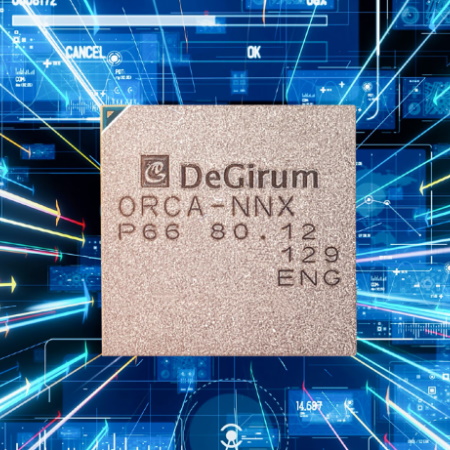
According to Greek mythology, the Chimera (a.k.a. Chimaera) was a monstrous fire-breathing hybrid creature that was composed of different animal parts. These days, the term "chimera" has come to describe (a) any mythical or fictional creature with parts taken from various animals, (b) anything composed of very disparate parts, or (c) anything perceived as wildly imaginative, implausible, or dazzling. … Read More → "Chimera GPNPU Blends CPU, DSP, and NPU into New Category of Hybrid Processor"

Virtualized IoT Devices in the Cloud Run Faster Than Their Real-World Counterparts!

I’m not a giddy software guru. I’m a hard-bitten hardware guy. I remember those days of yesteryear when I hadn’t even heard about esoteric things like virtualization, containerization, disaggregation, and other “-ations,” the discussion of which does my poor old noggin no favors whatsoever.

Now, by comparison, I know enough to nod knowingly and grunt appreciatively when someone who actually has a clue as to what they are talking about drops one or more of these terms into the conversation.

Saying … Read More → "Virtualized IoT Devices in the Cloud Run Faster Than Their Real-World Counterparts!"

A History of Early Microcontrollers, Part 3: The Rockwell Microelectronics PPS-4/1

Now that we’re well into the 21st century, most people rarely think of Rockwell Microelectronics in connection with microprocessors and microcontrollers. The parent company, North American Rockwell (renamed Rockwell International in 1973), was a major military/aerospace contractor. Rockwell built the Apollo spacecraft, the B1 Lancer bomber, and the US Space Shuttle. Rockwell’s Rocketdyne engines were used for most of the space booster rockets and ICBMs in the US for a long time. Rockwell introduced the world’s third commercially successful microprocessor, the 4-bit PPS-4, in 1972. By 1976, … Read More → "A History of Early Microcontrollers, Part 3: The Rockwell Microelectronics PPS-4/1"

A History of Early Microcontrollers, Part 2: The Texas instruments TMS1000

As with many first-of-a-kind devices, the Texas Instruments (TI) TMS0100 calculator chip family was a narrowly defined microcontroller, mostly good for making calculators. However, the first chip in the TMS0100 family, originally called the TM1802NC and later renamed the TMS0102, incorporated everything a microcontroller requires to be a microcontroller: a CPU, RAM, ROM, and I/O. Granted, it was a specialized microcontroller. Its I/O was application-specific and designed to be attached to a matrix keyboard and a seven-segment display. Nevertheless, the TMS1802NC was a microcontroller.

Originally conceived … Read More → "A History of Early Microcontrollers, Part 2: The Texas instruments TMS1000"

featured blogs
Jan 29, 2026
Most of the materials you read and see about gyroscopic precession explain WHAT happens, not WHY it happens....