feature article archive
Subscribe Now

All I Want for Christmas Is My 176-Layer Flash

“I have a memory like an elephant. I remember every elephant I’ve ever met.” – Herb Caen 

When Micron first told me about their new 176-layer flash memory, I thought I must’ve misheard something. That’s a typo, right? Surely you don’t mean you’ve made a chip with 176 mask layers. How heavy is that thing? 

Turns out it’s true. Micron has gone up, not out, in an effort to increase the density of its flash memory chips. The … Read More → "All I Want for Christmas Is My 176-Layer Flash"
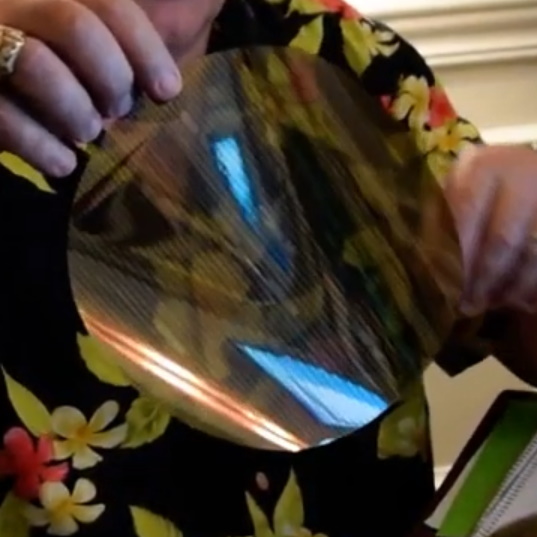

Ultra-Low-Cost Flexible ICs Make Possible Trillions of Smart Objects

As is usually the case, strange things are afoot in Max’s World (where the butterflies are bigger, the flowers are more colorful, the birds sing sweeter, and the beer runs plentiful and cold). Allow me to expound, elucidate, and explicate — don’t worry, I’m a professional, it won’t hurt at all (well, it won’t hurt me, but you’ll have to take your chances).

The word “pragmatic” is defined as “dealing with things sensibly and realistically … Read More → "Ultra-Low-Cost Flexible ICs Make Possible Trillions of Smart Objects"

When Obfuscated Code Is a Good Thing

“Syntactic sugar causes cancer of the semi-colons.” – anonymous 

Obfuscated code is normally considered a bad thing. Plenty of us write unintelligible code by accident, but, as a rule, we’re supposed to write code that’s clear, understandable, and maintainable. Clarity of purpose is a mark of good digital hygiene. 

But that goes out the window if you’re a security expert. In the crypto world, you want obfuscated code. You want … Read More → "When Obfuscated Code Is a Good Thing"

Advancing HLS Adoption – Xilinx, Silexica, Falcon

The history of digital hardware design is one of managing ever-increasing complexity by raising the level of design abstraction. When our digital circuits had four inputs, it was completely reasonable to do logic minimization with a Karnaugh map. When sequential logic was involved, a state diagram was a nice way to work things out, and we could generally draw a single page schematic with a dozen or so logic gates describing our implementation. As the number of logic gates soared, though, those schematics became hundreds of incomprehensible pages.

We leveled … Read More → "Advancing HLS Adoption – Xilinx, Silexica, Falcon"

Booting DOS from a Vinyl Record

“The difference between science and screwing around is writing it down.” – Adam Savage

Bonus points for creativity. A Slovakian engineer has finally solved the problem that we’ve all been struggling with. Namely, how do you boot MS-DOS from a 33⅓ RPM vinyl record? At last, we have a solution. 

As Jozef Bogin details in his blog, the process wasn’ … Read More → "Booting DOS from a Vinyl Record"

Spacing Out with Spin Memory

There’s an old saying that goes, “Standards are great… everyone should have one.” The problem being, of course, that so many people do, resulting in our being up to our armpits in the little rascals (not that I’m bitter, you understand).

Much the same thing applies to STEM (science, technology, engineering, and math) “laws” — there are now so many of these little scamps, and so many people dropping them willy-nilly into the conversation, that it makes my head spin. For example, I recently received an email saying, “As … Read More → "Spacing Out with Spin Memory"

How Magical is Apple’s M1 Chip, Really?

“Make me one with everything.” – Buddhist monk to a hot dog vendor 

Why don’t polar bears eat penguins? Easy: because polar bears live at the north pole and penguins live at the south pole. A polar bear in the wild has never seen a penguin. 

Did a Tyrannosaurus rex ever hunt a Stegosaurus? Nope, because the two species were never contemporaneous; they lived millions of years apart. In fact, we’re closer in time to T. rex than any Stegosaurus ever … Read More → "How Magical is Apple’s M1 Chip, Really?"

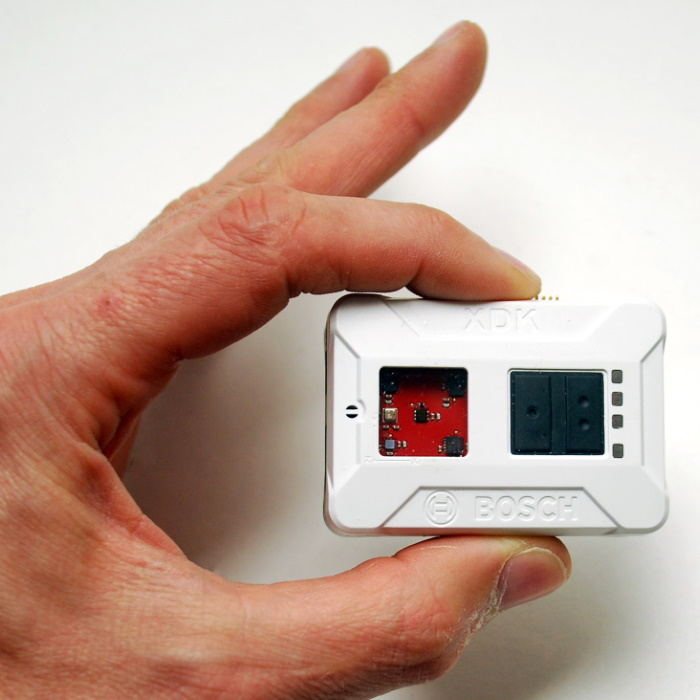
Bosch HW + Cartesiam SW = Rapid Prototyping of AI on the Edge

I just heard some mega-exciting news from the folks at Cartesiam.ai, whose claim to fame is that they enable embedded developers to bring artificial intelligence (AI) and machine learning (ML) to edge devices easily and quickly.

How easily? How quickly? The answer to both of these questions is “Very!” So, what’s the exciting news? Well, I’ll tell you in a minute, but first…

Read More → "Bosch HW + Cartesiam SW = Rapid Prototyping of AI on the Edge"

New Nonvolatile Memory Takes Shape

“Time moves in one direction, memory in another.” – William Gibson

Memory is different from logic. We learn this early in our careers, especially if the job involves fabricating one or the other. Logic gates scale. Memory cells scale, too, but not the same way. In extreme cases, we even do multi-chip modules or flip chips just to keep the memory and the logic apart. Intel makes logic ICs. SK Hynix makes memory chips. Different fab processes. Different recipes. Never the twain shall meet. 

Read More → "New Nonvolatile Memory Takes Shape"

VSORA Pushes the PetaFLOPS for Autonomous Driving

Autonomous driving is a wildly challenging problem. Of all the headline-grabbing technologies in development today, replacing the human driver in a car probably takes the most computing power, although you wouldn’t guess that from the obvious lack of computing power demonstrated by many of our fellow human drivers on the road. But the invention of “artificial stupidity” notwithstanding (did you SEE the way that idiot cut me off?), the industry is taking a methodical, phased approach to the task, with six levels of automation (numbered zero to five) starting with no automation whatsoever (level zero) … Read More → "VSORA Pushes the PetaFLOPS for Autonomous Driving"

featured blogs
Apr 2, 2026
Build, code, and explore with your own AI-powered Mars rover kit, inspired by NASA's Perseverance mission....