5G Meets 50,000 Fans at Super Bowl 2025
Recently, I was basking in my comfy command chair relishing the adverts on television. They’re really the only thing worth watching since the Gilmore Girls ended (my wife, Gina the Gorgeous, and I just finished watching the re-runs… again) and while one is waiting for the next season of Doctor Who starring Jodie Whittaker to launch in 2020.
One of these adverts showed a bunch of people streaming video at some weird game that seemed to keep on stopping and starting. Oh yes, I think it was called American football, where the “American” qualifier is used to … Read More → "5G Meets 50,000 Fans at Super Bowl 2025"
ARM Dips Toe Into Configurability Pool
“My ghast was flabbered.” – Anthony Grayling
User-configurable microprocessors are a subject near and dear to me, so I was excited to hear that ARM, a company renowned for its iron-fisted control over its CPU architecture, was loosening its grip and allowing users to create their own custom instructions. Could it be? Had the company really joined the ranks of the user-configurable army pioneered by Tensilica, ARC, RISC-V, and others?
Well… no, not really.
While ARM will, for the first time, </ … Read More → "ARM Dips Toe Into Configurability Pool"
Who – or What – is Trustworthy?
Today, it’s all about trust. Whom do you trust? And what is it about them that makes you think that they’re trustworthy? With people, it’s about knowing them and their intentions – more on that in a minute, but it’s a bit different with machines.
The IIC’s Take
The Industrial Internet Consortium (IIC) put out a document that takes … Read More → "Who – or What – is Trustworthy?"
What the FAQ is an Embedded System?
One of the perennial questions I keep getting asked is, “What is an embedded system?” Strange as it may seem, the problem isn’t that we lack a definition, but rather that we have too many – many of which subtly or overtly contradict each other. For example, some people would state that an embedded system is one that doesn’t have a user interface, while others would declare that a smartphone — which boasts an extremely sophisticated user interface — is the epitome of an embedded system.
As far back as 2012, here … Read More → "What the FAQ is an Embedded System?"
NXP MCU Hits 1 GHz
“That which we call a rose by any other name would smell as sweet.” – Romeo and Juliet, II, 2
When is an MCU not an MCU? Does it have to include on-chip flash? Does it need integrated peripherals? Must it be inexpensive? Small? Slow? Boring?
The beauty of an MCU is in the eye of the beholder, and NXP’s newest Read More → "NXP MCU Hits 1 GHz"
MRAM Testing and Solderability
This week we take on a couple of developments in the MRAM world. While much of our more recent MRAM coverage has focused on the newer (and not yet ready for production) SOT (spin-orbit torque) approach, today’s stories are rooted in the more common (and now in production) STT (spin-transfer torque) technology.
Testing the Magnetics
It would probably come as no big surprise that the operation of magnetic RAMs would involve magnetic fields. The nice thing is, however, that, for STT MRAM, all the magnetics … Read More → "MRAM Testing and Solderability"
Xilinx Vitis and Vitis AI Software Development Platforms
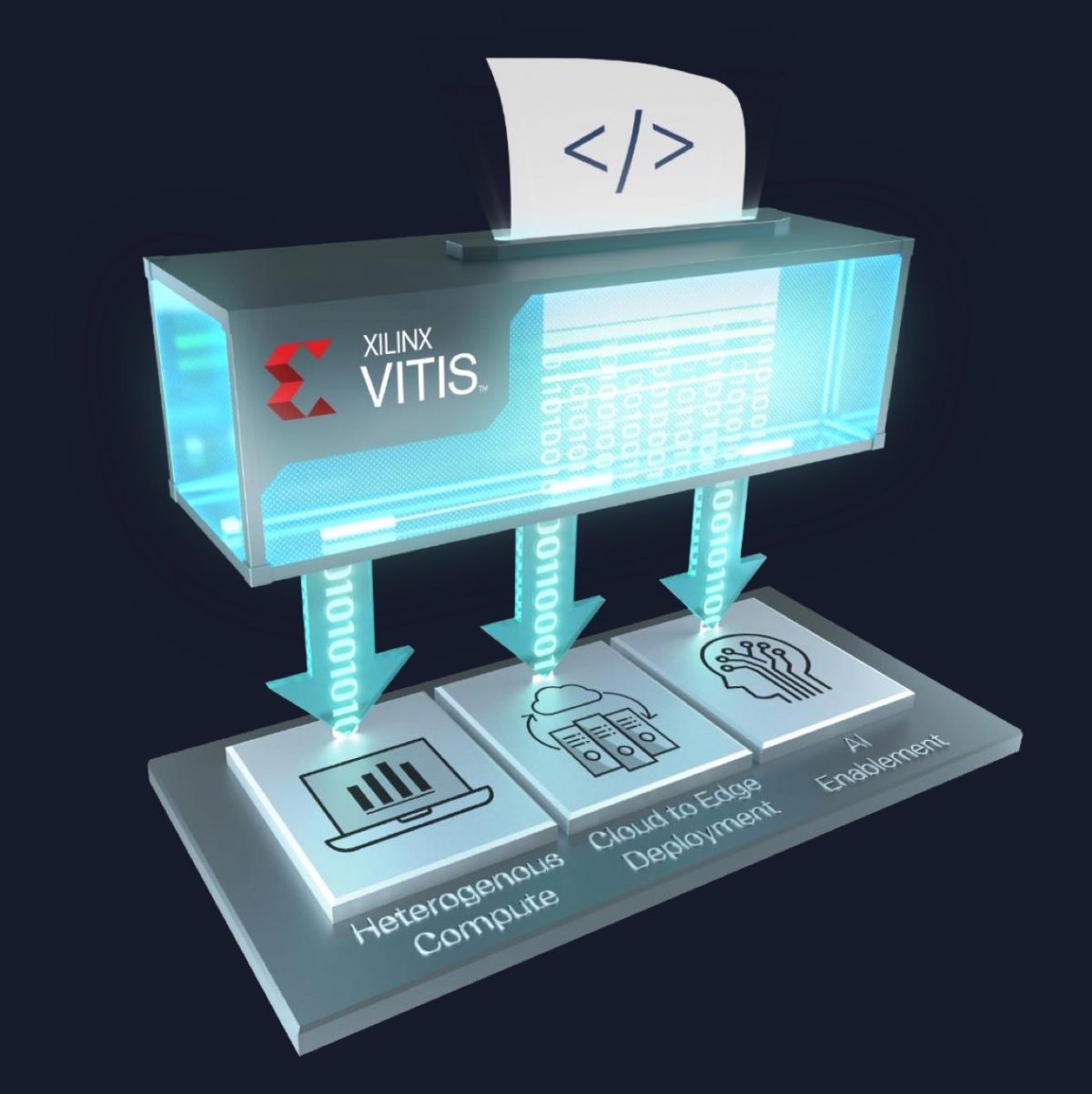
At this week’s Xilinx Developers Forum (XDF) in San Jose, California, Xilinx announced “Vitis” – a new framework for developing applications that use Xilinx programmable logic devices such as FPGAs, ACAPs, MPSoCs, RFSoCs, and all the other acronyms they can come up with that refer to what we’d call “FPGAs.” With an abundance of grandiosity, the company proclaimed that Vitis was “five years and a total of 1,000 man-years in the making.” Whoa! OK. We don’t frequently encounter person-millenia metrics for new product announcements. Even if we assume that they started this in 1984 when Xilinx was founded, they … Read More → "Xilinx Vitis and Vitis AI Software Development Platforms"
The Artificial Intelligence Apocalypse (Part 3)
In Part 1 of this 3-part miniseries, we discussed the origins of artificial intelligence (AI), and we considered some low-hanging AI-enabled fruit in the form of speech recognition, voice control, and machine vision. In Part 2, we noted some of the positive applications of AI, like recognizing skin cancer, identifying the source of outbreaks of food poisoning, and the early detection of potential pandemics.
In fact, there are so many feel-good possibilities for the future that they can make your head … Read More → "The Artificial Intelligence Apocalypse (Part 3)"
The Three Foes of the IoT
The Internet of Things will be a defining element of the next big era of computing, but building it is like making a lake with an eye-dropper. That’s because each IoT user has to figure out its return on investment (ROI), design an embedded system geared for it, and overcome its fears of insecurity.
Back in the late 1980’s, Mark Weiser of Xerox PARC defined this next phase as one in which computers are deeply embedded in everyday objects, creating smart environments. At the time, he called it ubiquitous computing, but now it’s commonly called … Read More → "The Three Foes of the IoT"