feature article archive
Subscribe Now

Which Will be the First Penguin in the Water?

Years ago I saw a television wildlife programme about penguins. One image that has remained in my mind was that of the hungry penguins clustering on the edge of the ice, needing to go to catch fish, but each frightened to be the first in, as there might be an equally hungry leopard seal wanting a meal of penguin. Eventually, a penguin gets pushed in by his friends. If he survives, the rest then jump in after him.

This image has always recurred to me as chip manufacturers approach the next wafer size increase. They all want … Read More → "Which Will be the First Penguin in the Water?"
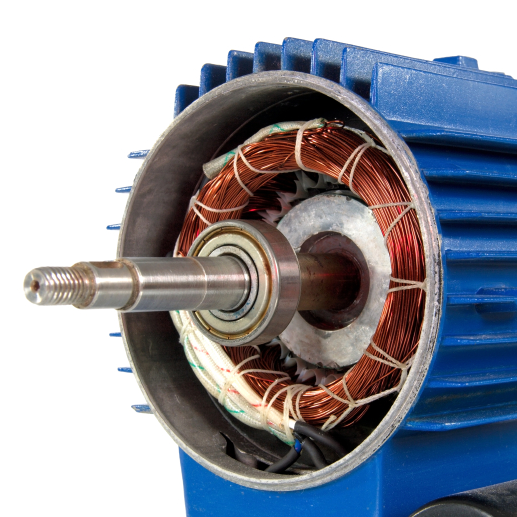

Get Your Motor Running

One of the definitions of an “embedded” system, as opposed to a “computer,” is, “anything that uses electronics to replace a previously mechanical device.” Programmable thermostats are embedded systems because they replace two dumb pieces of bent metal with a microcontroller and some software. Antilock brakes are embedded systems because they use MCUs instead of hydraulics to control skidding. And pretty much anything with an electric motor in it is an embedded system, because motors are all computer-controlled these days.

That presents a juicy market opportunity for the guys who make motors, and for the guys who … Read More → "Get Your Motor Running"

Xilinx vs. Altera

Hatfields vs McCoys, Coke vs Pepsi, Democrats vs Republicans, Army vs Navy, Nike vs Adidas, Microsoft vs Apple, iOS vs Android, Star Trek vs Star Wars, Deep Blue vs Kasparov, Edison vs Tesla… We love ourselves some feuds, don’t we? Any time capable competitors square off against each other and reach a standing state of equilibrium we have the ingredients for a fan-frenzied, religion-mimicking, mud-slinging, name-calling, grudge-holding feud.

In the FPGA world, that feud is Xilinx vs Altera.

This spirited rivalry has spanned the space of three decades. … Read More → "Xilinx vs. Altera"

Of HIDs and HALs and Hubs

Those of you in the sensor world are deeply involved with the low-level nuances and intricacies of your devices. How accurate, how linear, how to connect, how to read data, how to fuse data… – there’s so much to think about if you put your mind to it.

Of course, the people you’re doing this for – users of phones and tablets and medical devices and industrial sensors – couldn’t care less about that stuff. They want to sleep soundly knowing that, by hook or by crook, those sensors are detecting their assigned phenomena accurately, and the … Read More → "Of HIDs and HALs and Hubs"

Wireless Power Standards Proliferate

With new technologies come new standards. And resonant power transmission technology, which we covered recently, is no different. As a quick review, this is a way to charge phones and other devices without plugging in and without the kind of placement precision required by older inductive approaches such as those used by toothbrushes.

Why might standards matter? All of the spokespeople for the standards work underway – and, as we’ll see shortly, there’s lots of such work in progress – describe a vision … Read More → "Wireless Power Standards Proliferate"

The Mid-Winter Grab Bag

I finally got the call.

My phone rang, and the caller at the other end said, “This is Microsoft Technical Support. We’ve detected—”. I cut him off right there. “No, you’re not. You’re a %&@# scammer and should be in jail,” and hung up on him. (I sometimes miss old telephones where you could slam down the receiver.)

I’d heard about this scam before, where someone claims to be from Microsoft (it’s never Dell or Lenovo or Samsung) offering to help you clean up “infections” they’ve somehow detected on … Read More → "The Mid-Winter Grab Bag"

Keeping Score

We humans are a competitive bunch. Our competitive instinct inspires us to many of our greatest accomplishments. It’s not enough to simply do a thing. We need to do that thing better than the other guy, or the other team. Engineering is no different. We may pretend that we are simply “problem solvers,” but the truth is – we don’t just want to trap mice, or even trap mice efficiently. We want to design the “better” mousetrap.

After all, that is the primary purpose of modern technology – to WIN!

Monotonic Convergence

Synopsys recently announced the results of a flow collaboration with Fujitsu. Modestly buried in the discussion was a mention of 33% improvement in logic per area.

33%.

We’ve been at this game for a long time, and you’d think that the low-hanging fruit had long ago been picked. Which would leave us with the occasional 5-10% improvement in this and that after lots of algorithmic tweakage.

And yet here we are, in 2014, with a 33% improvement. Maybe I’m naï … Read More → "Monotonic Convergence"

Ultraconductors

Last year, I delved a little into the world of superconductors and their bizarre circuits. In poking about afterwards, I ran across something called an “ultraconductor.” I wondered if this was a brand of superconductor – it wasn’t. So what is this thing?

Turns out, it’s not just one thing. I found two threads to pull, and they were different. One led to an organic approach – which would sound pretty danged interesting – but it is not being actively pursued at the moment. ( … Read More → "Ultraconductors"

Das Boot und Kryptographie

Security wonks talk about the “root of trust” for computer systems, and for good reason. If you can’t start from a known-good position, everything that happens afterwards is potentially suspect. Building castles on sand, and all that.

Since every computer and embedded system has to bootstrap itself from cold metal, the boot-up process is necessarily the root of all subsequent trust. If the boot ROM is compromised… well, there’s no telling what mischief may follow.

That’s the concept behind Microsemi’s new “secure boot reference design.” Lock down the bootstrapping process first, … Read More → "Das Boot und Kryptographie"

featured blogs
Apr 24, 2026
A thought experiment in curiosity, confusion, and cosmic consequences....