

fresh bytes
Subscribe Now

Water from Canadian mine looks to be over a billion years old

Open-Pit.jpg

Lots of interesting stories get trapped inside minerals. Zircons can host clocks that can tell us the ages of the oldest pieces of our Solar System. Diamonds hold onto little bits of the Earth’s mantle that they captured before being blasted upward through the crust. Sometimes crystals can even contain small amounts of fluid locked away since the time they solidified.

The authors of a new study went looking for some of that ancient water in a slightly different place—fractures in extremely old rocks. What they found in that water recorded an impressive amount of history.

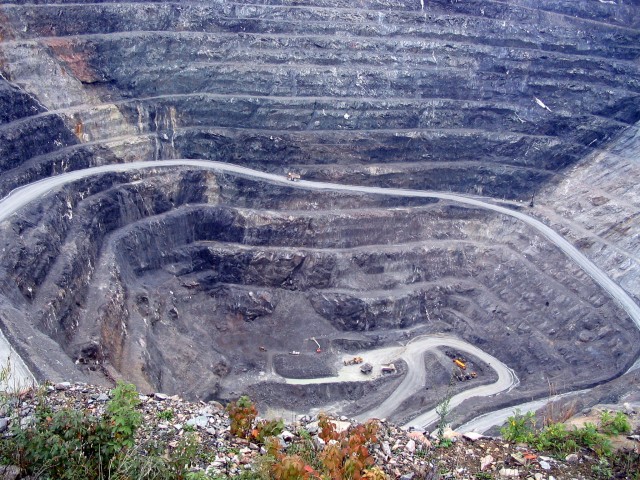
Deep in a Canadian mine, the shafts pass through some rocks that have seen a lot. About 2.7 billion years ago, sediment was formed from broken down bits of even older rocks that are now lost to us. The layers of sediment are frequently interrupted by thick layers of lava flows containing the copper and zinc that would one day entice humans to burrow 2.4 kilometers down into the darkness. The sediment was eventually buried deeply enough that, after solidifying into rock, it was metamorphosed into even tougher stuff. During that time, it was also bathed in super-hot hydrothermal fluids.
via ars technica

Continue reading 

Image: Wayne.edu

Leave a Reply

featured blogs
Feb 24, 2026
How a perfectly good Bosch HVAC system was undermined by preventable mistakes, and a thermostat interface that defies logic....

featured video

Cadence Chiplets Solutions | Helping you realize your chiplet ambitions

Sponsored by Cadence Design Systems

In this webinar, David Glasco, VP of Compute Solutions at Cadence, discusses how Cadence enables customers to transition from traditional monolithic SoC architectures to modular, scalable chiplet-based solutions, essential for meeting the growing demands of physical AI applications and high-performance computing.

Read eBook: Helping You Realize Your Chiplet Ambitions

featured chalk talk

Global Coverage With NTN
In this episode of Chalk Talk, Paul Fadlovich from TE Connectivity and Martin Lesund from Nordic Semiconductor and Amelia Dalton explore the what, why and how of NTN technology. They also explore the role that antennas play in satellite communication systems, and how Nordic Semiconductor’s nRF9151 System-in-Package and TE Connectivity’s broad range of antenna solutions can jump start your next global IoT design.
Feb 19, 2026
6,802 views





