

fresh bytes
Subscribe Now

Water from Canadian mine looks to be over a billion years old

Open-Pit.jpg

Lots of interesting stories get trapped inside minerals. Zircons can host clocks that can tell us the ages of the oldest pieces of our Solar System. Diamonds hold onto little bits of the Earth’s mantle that they captured before being blasted upward through the crust. Sometimes crystals can even contain small amounts of fluid locked away since the time they solidified.

The authors of a new study went looking for some of that ancient water in a slightly different place—fractures in extremely old rocks. What they found in that water recorded an impressive amount of history.

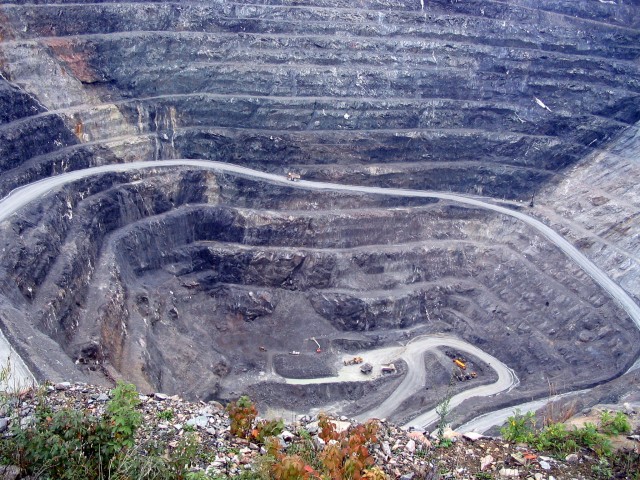
Deep in a Canadian mine, the shafts pass through some rocks that have seen a lot. About 2.7 billion years ago, sediment was formed from broken down bits of even older rocks that are now lost to us. The layers of sediment are frequently interrupted by thick layers of lava flows containing the copper and zinc that would one day entice humans to burrow 2.4 kilometers down into the darkness. The sediment was eventually buried deeply enough that, after solidifying into rock, it was metamorphosed into even tougher stuff. During that time, it was also bathed in super-hot hydrothermal fluids.
via ars technica

Continue reading 

Image: Wayne.edu

Leave a Reply

featured blogs
May 6, 2026
Hollywood has struck gold with The Lord of the Rings and Dune'”so which sci-fi and fantasy books should filmmakers tackle next?...

featured paper

Quickly and accurately identify inter-domain leakage issues in IC designs

Sponsored by Siemens Digital Industries Software

Power domain leakage is a major IC reliability issue, often missed by traditional tools. This white paper describes challenges of identifying leakage, types of false results, and presents Siemens EDA’s Insight Analyzer. The tool proactively finds true leakage paths, filters out false positives, and helps circuit designers quickly fix risks—enabling more robust, reliable chip designs. With detailed, context-aware analysis, designers save time and improve silicon quality.

Click to read more

featured chalk talk

Analog Output, Isolated Current, & Voltage Sensing Using Isolation Amplifiers
Sponsored by Mouser Electronics and Vishay
In this episode of Chalk Talk, Simon Goodwin from Vishay and Amelia Dalton chat about analog output, and isolated current and voltage sensing using isolation amplifiers. Simon and Amelia also explore the fundamental principles of current and voltage sensing and the variety of voltage and current sensing solutions offered by Vishay that can get your next design up and running in no time.
Apr 27, 2026
16,064 views






