fresh bytes
Subscribe Now

These are the cameras currently shooting on Mars

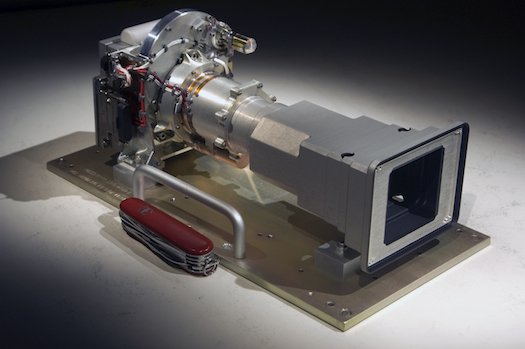
curiosity-cam.jpeg

The Mars Science Laboratory (MSL, aka the Curiosity) has two mast cameras, as seen here. One has a fixed 34mm f/8 lens that covers a 15° field of view, covering 1200×1200 pixels on a 1600 by 1200 CCD. The other is a fixed 100mm f/10 lens, with a 5.1° field of view on an identical sensor. You can see some pre-launch images taken with them here.

These cameras won’t start showing their stuff until later this week. They’ll transmit color images as they have Bayer Pattern Filter CCDs, and have adjustable filters to capture different wavelengths of light:

Each Mastcam camera head also has a filter wheel, so that images taken by looking through filters covering different, narrow visible and near-infrared wavelengths can be obtained. Filters for the 34 mm Mastcam are (in nanometers): 440, 525, 550, 675, 750, 865, 1034, and 440(neutral density). Filters for the 100 mm Mastcam are (in nanometers): 440, 525, 550, 800, 905, 935, 1035, and 880(neutral density). The neutral density filters are for viewing the Sun. Each filter wheel also includes a visually clear (actually infrared rejection coated) filter for nominal RGB (red, green, blue) imaging using the Bayer Pattern CCD. 
via Pop Photo

Continue reading 

Also, this is another good article about Curiosity’s cameras here at Wired:

The Photo-Geek’s Guide to Curiosity Rover’s 17 Cameras 

Leave a Reply

featured blogs
May 6, 2026
Hollywood has struck gold with The Lord of the Rings and Dune'”so which sci-fi and fantasy books should filmmakers tackle next?...

featured paper

Want early design analysis without simulation?

Sponsored by Siemens Digital Industries Software

Traditional verification methods are failing today's complex IC designs, which require a proactive, early-stage analysis approach. A shift-left methodology addresses IP block integration challenges and the limitations of traditional simulation and ERC tools. Insight Analyzer detects hard-to-find leakage issues across power domains, enabling early analysis without full simulation. Identify inefficiencies earlier to reduce rework, improve reliability, and enhance power performance.

Click to read more!

featured chalk talk

Designing Scalable IoT Mesh Networks with Digi XBee® for Wi-SUN
Sponsored by Mouser Electronics and Digi and Silicon Labs
In this episode of Chalk Talk, Quinn Jones from Digi, Chad Steider from Silicon Labs and Amelia Dalton explore how Wi-SUN Micro-Mesh can reduce cost and simplify deployment for your next IoT mesh network. They also investigate the benefits that Digi XBee solutions bring to these types of networks and how you can jump start your next IoT mesh network design with Silicon Labs and Digi.
May 4, 2026
12,764 views