fresh bytes
Subscribe Now

Move over 3D printing, self-assemblng 4D-printed materials are on the way

4dprint.jpg

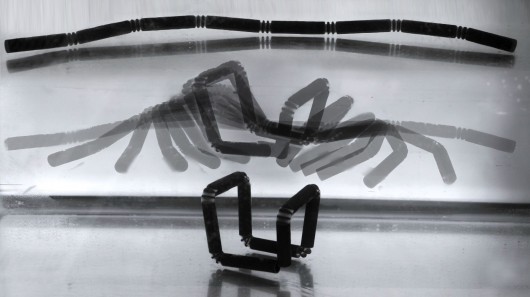
Molecular self-assembly, whereby molecules position themselves into defined arrangements, is commonplace in biological systems and nanotechnology. But researchers at MIT are working on so called “4D printing” technology that aims to bring the process up to the macro scale, enabling 3D-printed materials to be programmed to self-assemble into predefined shapes and structures. Just imagine buying some flat-pack furniture, bringing it home and enjoying a coffee whilst you watch it assemble itself.

This month, Skylar Tibbits, director of the MIT Self-Assembly lab, was named as one of the six Architectural League winners for collaborative research into programmable materials. The 4D printing process (with the 4th dimension being self-assembly over time) involves the use of materials that change their shape in response to movement or environmental factors, such as the presence of water, air, and/or temperature changes.
via Gizmag

Continue reading

Image: Skylar Tibbits

Leave a Reply

featured blogs
May 6, 2026
Hollywood has struck gold with The Lord of the Rings and Dune'”so which sci-fi and fantasy books should filmmakers tackle next?...

featured paper

Quickly and accurately identify inter-domain leakage issues in IC designs

Sponsored by Siemens Digital Industries Software

Power domain leakage is a major IC reliability issue, often missed by traditional tools. This white paper describes challenges of identifying leakage, types of false results, and presents Siemens EDA’s Insight Analyzer. The tool proactively finds true leakage paths, filters out false positives, and helps circuit designers quickly fix risks—enabling more robust, reliable chip designs. With detailed, context-aware analysis, designers save time and improve silicon quality.

Click to read more

featured chalk talk

Designing Scalable IoT Mesh Networks with Digi XBee® for Wi-SUN
Sponsored by Mouser Electronics and Digi and Silicon Labs
In this episode of Chalk Talk, Quinn Jones from Digi, Chad Steider from Silicon Labs and Amelia Dalton explore how Wi-SUN Micro-Mesh can reduce cost and simplify deployment for your next IoT mesh network. They also investigate the benefits that Digi XBee solutions bring to these types of networks and how you can jump start your next IoT mesh network design with Silicon Labs and Digi.
May 4, 2026
11,161 views