

fresh bytes
Subscribe Now

Liquid-like compound could lead to better thermoelectric devices

Thermoelectric materials work by converting differences in temperature into electric voltage. If two parts of such a material experience significantly different temperatures, electrons within it will flow from the warmer part to the cooler, creating an electrical current in the process. Using these materials, electricity could be generated by the temperature differences on the inside and outside of jackets,within car engines, or even between the human body and the air around it … just to list a few examples. An international team of scientists have now discovered that an existing material, which behaves like a liquid but isn’t one, displays particularly impressive thermoelectric properties.

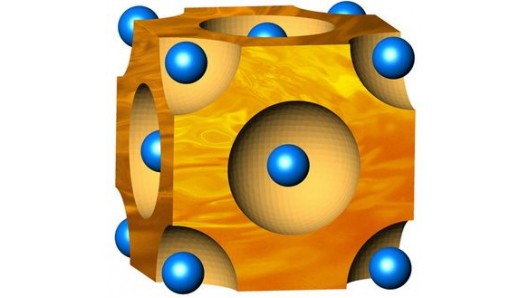
The material is actually a solid, consisting of copper and selenium. The selenium takes the form of a rigid crystalline lattice, which the copper atoms easily flow through – it’s described as being similar in principle to a wet sponge, with the copper playing the part of the water.
via gizmag
Continue reading 

copperselenium.jpg
In this diagram, the blue spheres represent selenium atoms forming a crystal lattice, while the orange regions represent the copper atoms that flow through the crystal structure like a liquid
(Image: Caltech/Jeff Snyder/Lance Hayashida)


Leave a Reply

featured blogs
May 6, 2026
Hollywood has struck gold with The Lord of the Rings and Dune'”so which sci-fi and fantasy books should filmmakers tackle next?...

featured paper

Quickly and accurately identify inter-domain leakage issues in IC designs

Sponsored by Siemens Digital Industries Software

Power domain leakage is a major IC reliability issue, often missed by traditional tools. This white paper describes challenges of identifying leakage, types of false results, and presents Siemens EDA’s Insight Analyzer. The tool proactively finds true leakage paths, filters out false positives, and helps circuit designers quickly fix risks—enabling more robust, reliable chip designs. With detailed, context-aware analysis, designers save time and improve silicon quality.

Click to read more

featured chalk talk

Designing Scalable IoT Mesh Networks with Digi XBee® for Wi-SUN
Sponsored by Mouser Electronics and Digi and Silicon Labs
In this episode of Chalk Talk, Quinn Jones from Digi, Chad Steider from Silicon Labs and Amelia Dalton explore how Wi-SUN Micro-Mesh can reduce cost and simplify deployment for your next IoT mesh network. They also investigate the benefits that Digi XBee solutions bring to these types of networks and how you can jump start your next IoT mesh network design with Silicon Labs and Digi.
May 4, 2026
18,356 views




