fresh bytes
Subscribe Now

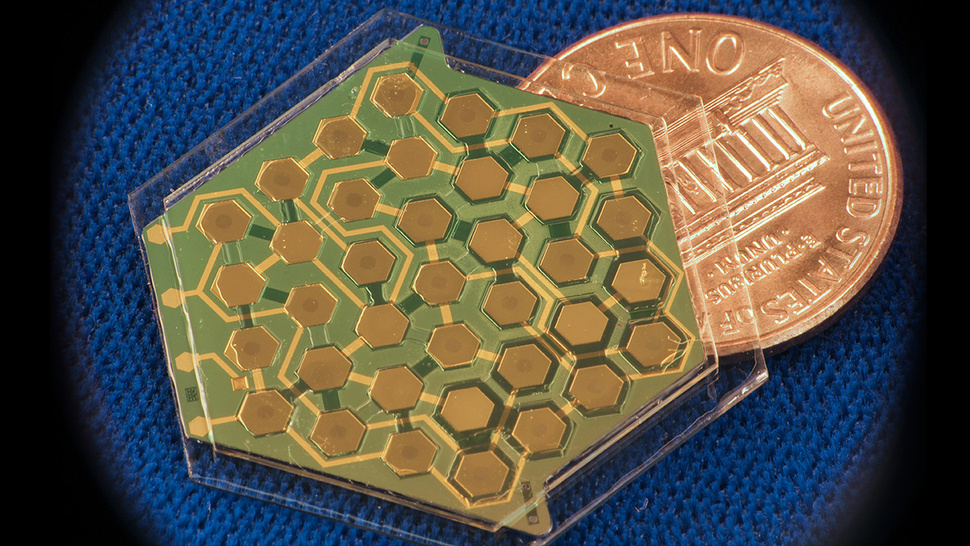
DARPA made a vacuum the size of a penny

smallvacuum.jpg

The minuscule vacuum pump pictured here was developed at the University of Michigan and uses an array of tiny hexagonal compartments connected with even smaller channels to maximize their suction. It sadly can’t be used to clean up chip crumbs, but as a way to cool tiny electronics, it could revolutionize smartphones.

And this is actually one of the larger micro vacuums the researchers had created. Other examples are smaller than a dime, and the breakthroughs from this research could eventually lead to mechanical vacuums that exist on the microscopic scale, giving high-performance processors their own built-in cooling fans.
via Gizmodo


Continue reading

Leave a Reply

featured blogs
May 6, 2026
Hollywood has struck gold with The Lord of the Rings and Dune'”so which sci-fi and fantasy books should filmmakers tackle next?...

featured paper

Want early design analysis without simulation?

Sponsored by Siemens Digital Industries Software

Traditional verification methods are failing today's complex IC designs, which require a proactive, early-stage analysis approach. A shift-left methodology addresses IP block integration challenges and the limitations of traditional simulation and ERC tools. Insight Analyzer detects hard-to-find leakage issues across power domains, enabling early analysis without full simulation. Identify inefficiencies earlier to reduce rework, improve reliability, and enhance power performance.

Click to read more!

featured chalk talk

Designing Scalable IoT Mesh Networks with Digi XBee® for Wi-SUN
Sponsored by Mouser Electronics and Digi and Silicon Labs
In this episode of Chalk Talk, Quinn Jones from Digi, Chad Steider from Silicon Labs and Amelia Dalton explore how Wi-SUN Micro-Mesh can reduce cost and simplify deployment for your next IoT mesh network. They also investigate the benefits that Digi XBee solutions bring to these types of networks and how you can jump start your next IoT mesh network design with Silicon Labs and Digi.
May 4, 2026
11,161 views