Semiconductor
Subscribe Now

Meet the Power-Delivery Chiplets That May Save 50% of Your AI Power

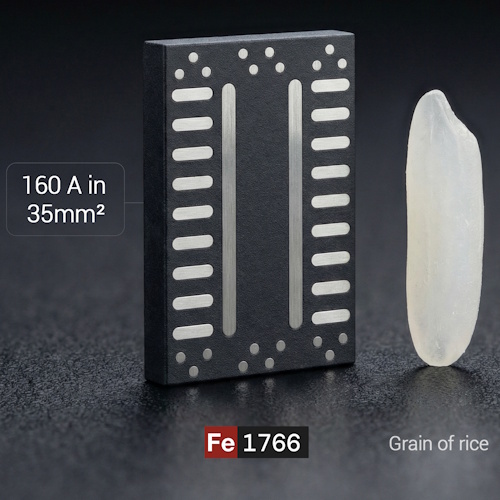
If you’d tried to start a power-related conversation with me just a few short years ago, I’d probably have shrugged my shoulders in disinterest. These days, however, it seems the subject of power is on everybody’s lips. It’s a hot topic, if you’ll forgive the pun (and even if you won’t).

I remember the mainframe computer we were working on in 1980. … Read More → "Meet the Power-Delivery Chiplets That May Save 50% of Your AI Power"

AI at the Edge? Meet Wi-Fi in Microwatts

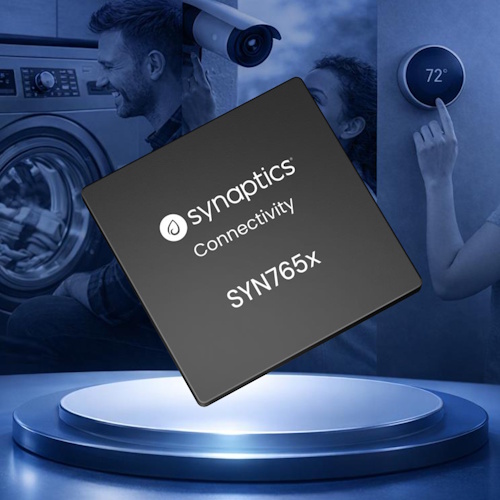
I’ve just been introduced to a technology that has the potential to revolutionize battery- and ambient-powered AI-enabled sensors using Bluetooth or WiFi while consuming only 1/1000th the power of regular Bluetooth and WiFi implementations. Intrigued? Read on!

Before we plunge into the fray with gusto and abandon, indulge me, if you will. I read a lot of science fiction. One of the … Read More → "AI at the Edge? Meet Wi-Fi in Microwatts"

Ray Holt, inventor of the first microprocessor chip set, needs our help.

Ray Holt, inventor of the first microprocessor chip set, which was used as the digital flight computer in the US Navy’s F-14 Tomcat fighter jet, is ill and needs our help. I first wrote about Ray in 2022 (see “Ray Holt and the CADC – The World’s First Military Digital Flight Computer”). That article … Read More → "Ray Holt, inventor of the first microprocessor chip set, needs our help."

Analog Neuromorphic Processors for ASICs/SoCs Offer Microwatt Edge AI

We live in exciting times with respect to AI and the devices used to implement inferencing at the edge, where the “internet rubber” meets the “real-world road,” as it were.

It reminds me of those distant days in the 1970s when we were all “feeling our way” with 8-bit microprocessors. I’m thinking of devices like the Intel 8008 (1972), Intel 8080 (1974), Motorola 6800 (1974), MOS Technology 6502 (1975), Zilog … Read More → "Analog Neuromorphic Processors for ASICs/SoCs Offer Microwatt Edge AI"

Want Nano-Scale, CMOS-Based MEMS Sensors?

We’re talking about CMOS-based MEMS sensors that are 1,000 times smaller than their traditional silicon-based MEMS counterparts, offering greater bandwidth and higher sensitivity, while also being more cost-effective and reliable. Seriously—what’s not to love?

I’ve just been chatting with Dr. Josep Montanyà, who, along with Dr. Marc Llamas, founded Nanusens</ … Read More → "Want Nano-Scale, CMOS-Based MEMS Sensors?"

December 1, 2025
November 19, 2025
November 17, 2025
November 12, 2025
November 6, 2025
November 5, 2025
November 4, 2025
October 27, 2025
October 23, 2025
October 14, 2025
October 7, 2025
September 25, 2025
September 24, 2025
September 22, 2025
September 19, 2025
September 17, 2025
September 15, 2025
September 11, 2025
featured blogs
Nov 14, 2025
Exploring an AI-only world where digital minds build societies while humans lurk outside the looking glass....
chalk talks
Driving innovation in 3D IC Design: Siemens Calibre MultiPhysics Work Flow — Siemens  In this episode of Chalk Talk, John Ferguson from Siemens and Amelia Dalton explore how we can drive 3D IC innovation with Siemens Calibre MultiPhysics Work Flow. They also investigate the implications of thermal issues on 3D IC design, the benefits of multiphysics simulations from the concept stage throughout the design cycle, and the … Read More → "Driving innovation in 3D IC Design: Siemens Calibre MultiPhysics Work Flow — Siemens"
Accelerating Time to Fault Campaign Success with Siemens EDA — Siemens  In this episode of Chalk Talk, Ann Keffer and Robert Serphillips from Siemens and Amelia Dalton explore how the Siemens EDA functional safety platform can guide your team through the complete ISO 26262 lifecycle. They also examine the benefits that the Veloce Fault App brings to automotive IC designs and how you can take … Read More → "Accelerating Time to Fault Campaign Success with Siemens EDA — Siemens"
FPGA-based Prototyping with the Latest High-Capacity FPGA Enables New Use Modes – Siemens  FPGA-based prototyping is an essential tool for any SoC and digital chip design and verification. In this episode of Chalk Talk, Juergen Jaeger from Siemens and Amelia Dalton explore the multitude of benefits of the Veloce proFPGA CS platform from Siemens. They also investigate the debug capabilities, software prototyping and scalable hardware of this … Read More → "FPGA-based Prototyping with the Latest High-Capacity FPGA Enables New Use Modes – Siemens"
Calibre DesignEnhancer: Layout Modifications that Improve your Design – Siemens  In this episode of Chalk Talk, Jeff Wilson from Siemens and Amelia Dalton investigate the variety of benefits that the Calibre DesignEnhancer brings to IC design and how this tool suite can be used to find and fix critical design stage issues. They also explore how the Calibre DesignEnhancer can Identify and resolve issues … Read More → "Calibre DesignEnhancer: Layout Modifications that Improve your Design – Siemens"
Vector Funnel Methodology for Power Analysis from Emulation to RTL to Signoff – Synopsys  The shift left methodology can help lower power throughout the electronic design cycle. In this episode of Chalk Talk, William Ruby from Synopsys and Amelia Dalton explore the biggest energy efficiency design challenges facing engineers today, how Synopsys can help solve a variety of energy efficiency design challenges and how the shift left methodology … Read More → "Vector Funnel Methodology for Power Analysis from Emulation to RTL to Signoff – Synopsys"
Accelerating Tapeouts with Synopsys Cloud and AI — Synopsys  In this episode of Chalk Talk, Amelia Dalton and Vikram Bhatia from Synopsys explore how you can accelerate your next tapeout with Synopsys Cloud and AI. They also discuss new enhancements and customer use cases that leverage AI with hybrid cloud deployment scenarios, and how this platform can help CAD managers and engineers reduce … Read More → "Accelerating Tapeouts with Synopsys Cloud and AI — Synopsys"