feature article archive
Subscribe Now

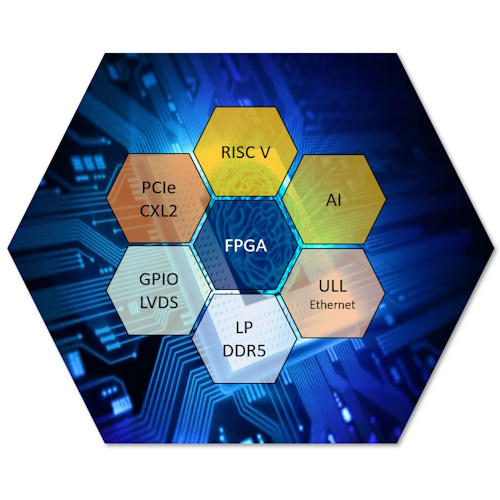
AMD Unleashes an FPGA-based Kria SoM Specifically for Motor Control

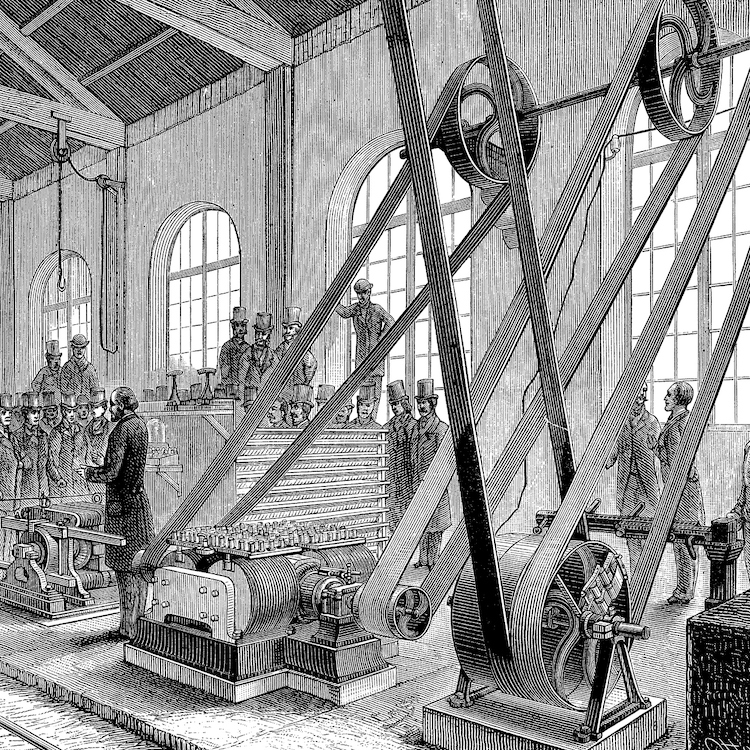
The modern world literally runs on electric motors. They’re used in every aspect of manufacturing, logistics, and transportation. Back in the earliest days of electric motors, when motors were still quite big and expensive, a motor’s mechanical output power would likely be distributed to individual workstations within a factory via a system of belts, pulleys, and drive shafts. Many late 18th and early 19th century factories already had these mechanical drive systems in place to distribute steam or … Read More → "AMD Unleashes an FPGA-based Kria SoM Specifically for Motor Control"
Intel plans to spin off FPGA group as an independent company nine years after buying Altera

On October 3, CEO Pat Gelsinger announced Intel’s plan to spin out the company’s Programmable Solutions Group (PSG) – the group that was once known as independent FPGA maker Altera – into an independently operated company. Gelsinger’s explanation for why Intel is spinning PSG back out into an independent company is that he’s unlocking shareholder value. He said that PSG had underperformed under Intel’s management and needed more management attention than it was getting from Intel corporate. The spun-out FPGA company will recover the independence it needs to compete in the FPGA arena. If the … Read More → "Intel plans to spin off FPGA group as an independent company nine years after buying Altera"

Edward Keonjian: The High-IQ, Armenian-American Forrest Gump of Microelectronics, Part 5

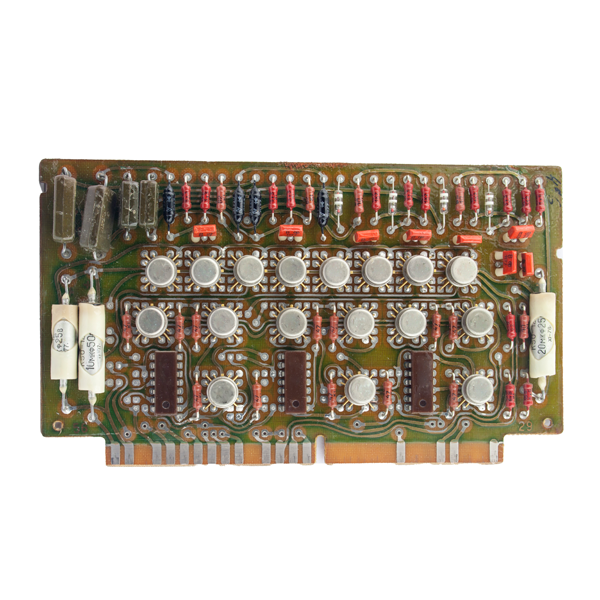
By 1963, Edward Keonjian had earned a PhD in electrical (radio) communications in the USSR, survived World War II and the siege of Leningrad, escaped a Nazi slave labor camp with his family, emigrated to the US, learned English, worked menial jobs until he could re-establish himself as an electrical engineer, pioneered transistor applications and co-authored the first book on that topic at General Electric during the earliest days of the solid-state revolution, and managed the development of a transistorized missile guidance computer for early US ICBMs at American Bosch Arma. While visiting potential component suppliers for … Read More → "Edward Keonjian: The High-IQ, Armenian-American Forrest Gump of Microelectronics, Part 5"

Boosting the Efficiency and Performance of Silicon Chips with a Special Epitaxial Layer

Did you ever see the Doctor Who episode “Vincent and the Doctor”? This starts with the Doctor and his companion, Amy, visiting a Vincent van Gogh exhibition at the Musée d’Orsay in Paris. When they spot an alien creature in one of Vincent’s paintings, they travel back in time to find out what’s happening and sort things out. 

We now regard Vincent as being an artistic genius, but his paintings were largely unappreciated and rejected by critics and the public while he was alive. In … Read More → "Boosting the Efficiency and Performance of Silicon Chips with a Special Epitaxial Layer"

Edward Keonjian: The High-IQ, Armenian-American Forrest Gump of Microelectronics, Part 4

The launch of Sputnik by the Soviet Union on October 4, 1957, was a red flag to the US government. It signaled the USSR’s development of ICBMs that could deliver nuclear weapons across oceans. In response, the US government ramped up its own ICBM program with the completion of the Atlas and development of the Titan missile systems. American Bosch Arma benefitted from those programs by winning the contract to develop an inertial guidance system for the Titan missile, which progressed so quickly that it was retrofitted to the Atlas missile as well. That contract created the … Read More → "Edward Keonjian: The High-IQ, Armenian-American Forrest Gump of Microelectronics, Part 4"

Is This the Ultimate Chiplet Interconnect Technology?

I love the smell of fresh chiplets in the morning, but I bet you hear that all the time these days. As you may recall, rather than creating a semiconductor device as a single humongous piece of silicon, the latest and greatest alternative is to take multiple dice, mount them on a common substrate, and present everything in a single package, which may be referred to as a “multi-die system.” In this case, the dice are commonly referred to as “chiplets” or “tiles.”

Like many things, this sounds easy if … Read More → "Is This the Ultimate Chiplet Interconnect Technology?"

Edward Keonjian: The High-IQ, Armenian-American Forrest Gump of Microelectronics, Part 3

Having survived World War II, a difficult emigration to the United States, a rat- and bug-infested apartment, and numerous job rejections, Edward Keonjian was finally working at the cutting edge of electronics for 1953. He was a development engineer at the Semiconductor Applications Unit of the General Electric (GE) Electronics Laboratory in Syracuse, New York and had just co-published a book titled Principles of Transistor Circuits with eight other authors. The book was edited by the Semiconductor Applications Unit’s manager, Richard Shea, and it encapsulated everything … Read More → "Edward Keonjian: The High-IQ, Armenian-American Forrest Gump of Microelectronics, Part 3"

Edward Keonjian: The High-IQ, Armenian-American Forrest Gump of Microelectronics, Part 2

When Edward Keonjian arrived in New York City from war-torn Europe in February 1947, he could speak Armenian, Russian, and German, but he was not yet able to speak more than a couple of words in English. Even though he had the equivalent of a PhD in radio communications from the Leningrad Electrotechnical Institute (LETI), his lack of English skills relegated him to menial jobs. He cleaned stores and washed cars. Meanwhile, the World Church Service had placed the Keonjian family in an inexpensive and very odd sort of hotel. In his autobiography, Survived to Tell, Keonjian … Read More → "Edward Keonjian: The High-IQ, Armenian-American Forrest Gump of Microelectronics, Part 2"

Boosting Semiconductor Fab Productivity by up to 20 Percent!

In the microelectronics industry, the term “semiconductor fabrication plant” (a.k.a. “semiconductor fab”; sometimes called a “foundry”) is a factory for semiconductor device fabrication. In layman’s terms, this is where they build the silicon chips that power our modern world. Even a small fab can easily cost $1 billion. Spending $3 to $5 billion is not uncommon, and you can splash a lot more cash than this without straining yourself if you are so inclined.

The Read More → "Boosting Semiconductor Fab Productivity by up to 20 Percent!"

Chiplets for the Unwashed Masses

Do you ever get the feeling you are sitting on the cusp of a new era, metaphorically speaking? That’s the way I currently feel with respect to chiplets (I only wish I was gowned in garb apposite to the occasion).

The concept of chiplets has been around for some time, and they’ve been in use for the past few years, but only by big players like Intel, for example, who have humongous resources and who can control every aspect of chiplet development and deployment. Now it seems that … Read More → "Chiplets for the Unwashed Masses"

featured blogs
Mar 20, 2026
From machines that see and think, to systems that act, and the humans that nudge them along....