feature article archive
Subscribe Now

Free As In Beer

One of the great charms of open-source software is that it’s free. Sort of.

As any real (read: employed) programmer working with open-source software can tell you, free software ain’t free. The minute you spend, well, one minute working on the code, you’ve spent your company’s money. And every additional minute costs more money—to say nothing of the lab time, bench instruments, software licenses, and other resources you and your colleagues devote to the effort. You get the idea.

Yet “free” open-source software … Read More → "Free As In Beer"

DAC, Death, and the Future

This year’s Design Automation Conference in San Diego was, as has become tradition, kicked off by Gary Smith’s presentation on the state of the EDA industry and EDA’s role in the design of the coming generations of electronic devices.  As usual, the presentation was a mix of data collected from numerous industry sources, interesting charts and graphs projecting market behaviors into the distant future, and educated analysis mixed with wild speculation on the complex dynamics of technology and money that is the semiconductor industry.

The next day, Cadence hosted a … Read More → "DAC, Death, and the Future"

Electronic Scalpel

Brain surgery is a complicated process. After all, they don’t call it “brain surgery” for nothing. And it’s not a one-man show: it’s a team operation. Someone’s got to… ahem… mellow you out before taking you to the OR. Someone’s got to shave a bald spot. Someone’s got to make sure everything is clean and germ-free. Someone has to give you the final giggly-gas (or whatever will send you into an oblivious slumber). Someone has to provide… access to the brain. And … Read More → "Electronic Scalpel"

Power to See

[Editor’s note: this is the fifth in a series of articles derived from a session at this year’s ISSCC that focused on sensors and energy harvesting. The prior article dealt with a high-voltage current sensor. For more details, you are referred to the ISSCC proceedings.]

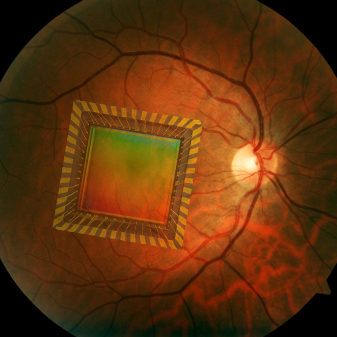
Most of us don’t know what it’s like not to be able to see clearly, even if with the aid of eyewear. Now, you might say that, for the great majority … Read More → "Power to See"

How Vulnerable is Your Language?

At ESC last month, Green Hills’ Dan O’Dowd made the point that, increasingly, software is becoming the dominant element in an embedded product: it is often the most expensive element of the development costs; it is often the most difficult part of the development; it is frequently late; and it may be the part of the product that creates the most problems when field deployed. On the positive side, it can provide a way to differentiate from other products in the market, and software has the flexibility to create multiple versions of a product running on … Read More → "How Vulnerable is Your Language?"

Leading Lattice

Darin Billerbeck looks out of place and restless in the dark, heavy, ostentatious ambiance of Lattice Semiconductor’s boardroom.  Like a well-trained athlete donning his grandfather’s hat and cane, his energy bursts through the seams – fighting with the oppressive atmosphere that echoes the values of his predecessors.  Lattice was once a house of hierarchy – a top-down, micro-managed, dictatorship where blame flowed downward and credit upward.  

Today, the baroque trappings of the company’s tumultuous past are being cleared to make way for a cleaner, more welcoming future.  Pieces … Read More → "Leading Lattice"

No Escape

There’s no such thing as “true black.” I mean, there’s the idea of it, the aspiration, but, so far, we have not been able to create a pure black in the real world. The bizarre realm of carbon nanotubage has gotten us close –  very close – but still: it’s only close.

True black means that no light – nary a single photon – reflects off the surface. It’s all captured and absorbed. While this might have interesting artistic and philosophical ramifications, it also has a … Read More → "No Escape"

Putting a Spin on Motor Control

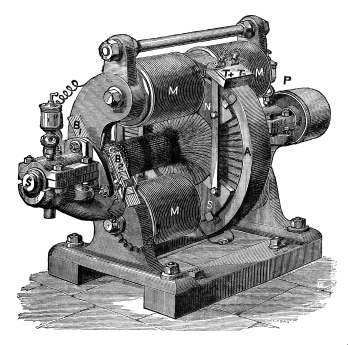
More than 180 years ago, a bunch of guys started messing around with harnessing electromagnetism – building devices that converted electrical energy to mechanical energy.  Their basic design – the electric motor – has changed surprisingly little in the almost two centuries since those early attempts.  Electric motors have gradually become more efficient and more powerful, but the fundamentals have remained the same with few major breakthroughs – until fairly recently. 

We see a number of examples in our world where devices have been made “smart” to very little advantage.  Well-meaning engineers, enamored with the potential … Read More → "Putting a Spin on Motor Control"

featured blogs
Apr 24, 2026
A thought experiment in curiosity, confusion, and cosmic consequences....