

fresh bytes
Subscribe Now

Why you should thank a caterpillar for your mustard and wasabi

19084908400_55a2d0f697_o_custom-98c8e7841ea475b96160a819b8c677ac797a236b-s1500-c85.jpg

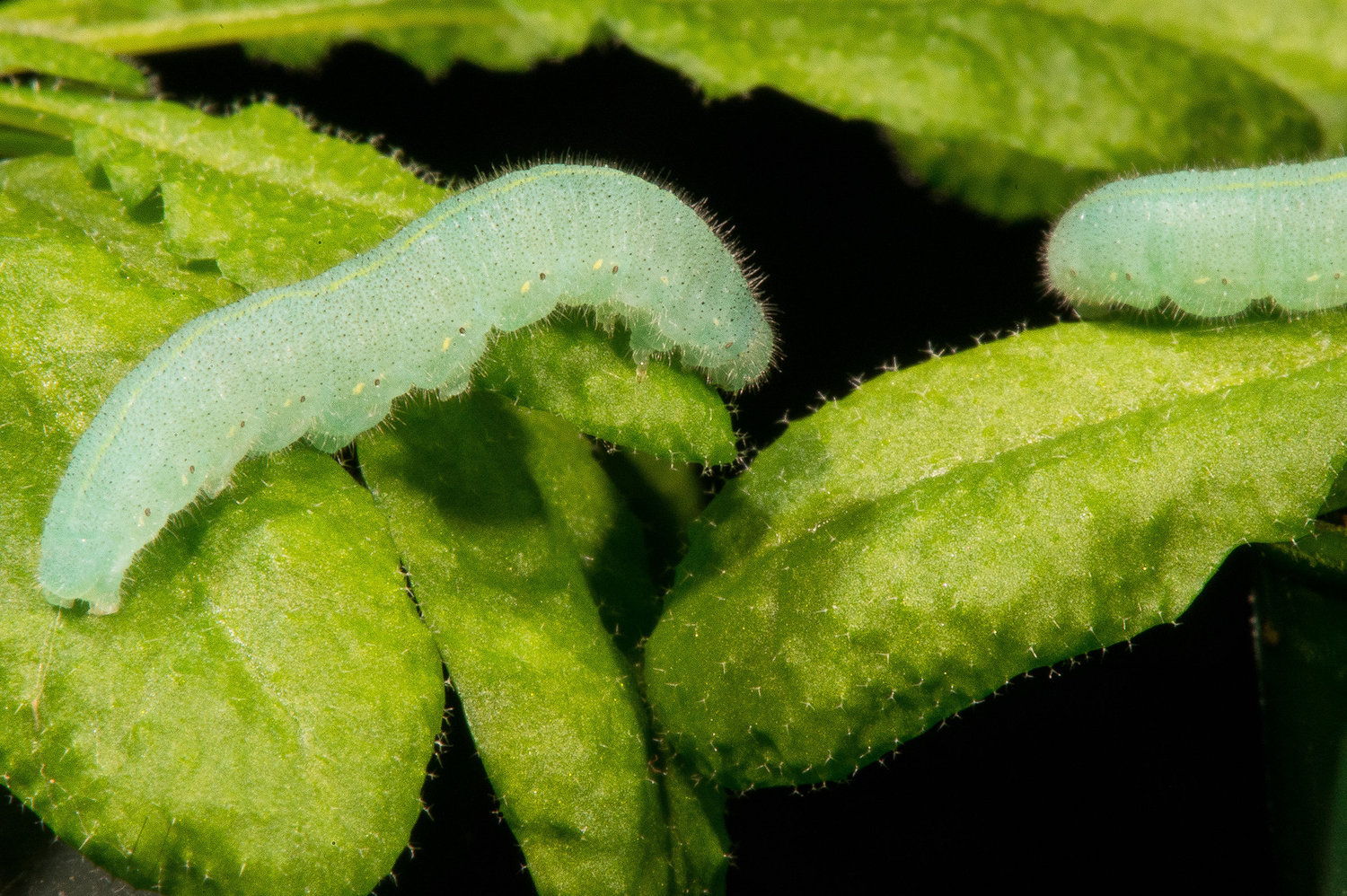
It happened through what’s called an evolutionary arms race, explains Chris Pires, a plant evolutionary biologist at the University of Missouri and one of the lead authors of the study. This works a lot like a military arms race — repeated escalations to have better weapons or defenses — but on an epic timescale. In this case, the opposing armies are caterpillars of the cabbage butterfly and plants in the order Brassicales, which today includes cabbage, horseradish, kale and mustard.

So here’s what happened: Some 90 million years ago, Pires explains, the ancestors of these vegetables evolved defenses to protect themselves from being eaten by insects: They started making chemicals called glucosinolates. “Most bugs don’t like it. It’s toxic,” Pires says. “It turns their guts inside out.”

Glucosinolates are a major component of mustard oil, so for simplicity’s sake, let’s call the defense, as Pires does, “a mustard oil bomb.”
via NPR

Continue reading 

Image: Roger Meissen/Bond LSC

Leave a Reply

featured blogs
Apr 2, 2026
Build, code, and explore with your own AI-powered Mars rover kit, inspired by NASA's Perseverance mission....

featured paper

Quickly and accurately identify inter-domain leakage issues in IC designs

Sponsored by Siemens Digital Industries Software

Power domain leakage is a major IC reliability issue, often missed by traditional tools. This white paper describes challenges of identifying leakage, types of false results, and presents Siemens EDA’s Insight Analyzer. The tool proactively finds true leakage paths, filters out false positives, and helps circuit designers quickly fix risks—enabling more robust, reliable chip designs. With detailed, context-aware analysis, designers save time and improve silicon quality.

Click to read more

featured chalk talk

Connecting the World Through Space
Sponsored by Mouser Electronics and Qorvo
In this episode of Chalk Talk, Ryan Jennings from Qorvo and Amelia Dalton explore the critical components and design challenges inherent in LEO satellite infrastructure and how Qorvo’s solutions are enabling the next generation of space-based connectivity. 
Mar 30, 2026
22,275 views






