fresh bytes
Subscribe Now

Why spacecraft of the future will be packed with microfluidics

microfluidics.png

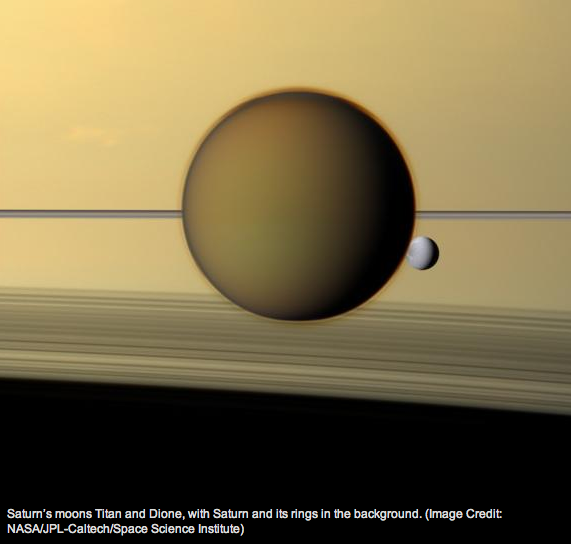
Say you want to visit Titan, to study the bizarre chemistry happening on the surface of Saturn’s fascinating, cloudy moon. After all, Titan has moved to the top of many astrobiologists’ wish list in recent years, as the Cassini spacecraft has beamed back grainy images of methane and ethane lakes. There’s even been talk of a salty liquid water ocean lurking beneath the frigid outer shell.

But as with any space mission, mass and its cousin, volume, are the most prohibitive constraints to inclusion on a payload. Engineers spend years miniaturizing components and trimming milligrams to pack as much scientific might as possible onto a given mission. So how do you maximize scientific productivity while minimizing mass and volume?
via Wired


Continue reading 

Leave a Reply

featured blogs
May 6, 2026
Hollywood has struck gold with The Lord of the Rings and Dune'”so which sci-fi and fantasy books should filmmakers tackle next?...

featured paper

Quickly and accurately identify inter-domain leakage issues in IC designs

Sponsored by Siemens Digital Industries Software

Power domain leakage is a major IC reliability issue, often missed by traditional tools. This white paper describes challenges of identifying leakage, types of false results, and presents Siemens EDA’s Insight Analyzer. The tool proactively finds true leakage paths, filters out false positives, and helps circuit designers quickly fix risks—enabling more robust, reliable chip designs. With detailed, context-aware analysis, designers save time and improve silicon quality.

Click to read more

featured chalk talk

What’s Driving Zephyr’s Momentum
In this episode of Chalk Talk, Brendon Slade from NXP and Amelia Dalton explore what Zephyr makes unique, how it compares to other RTOS options, and how its design philosophy enables developers to scale from simple prototypes to production-ready systems with confidence.
May 4, 2026
9,573 views