

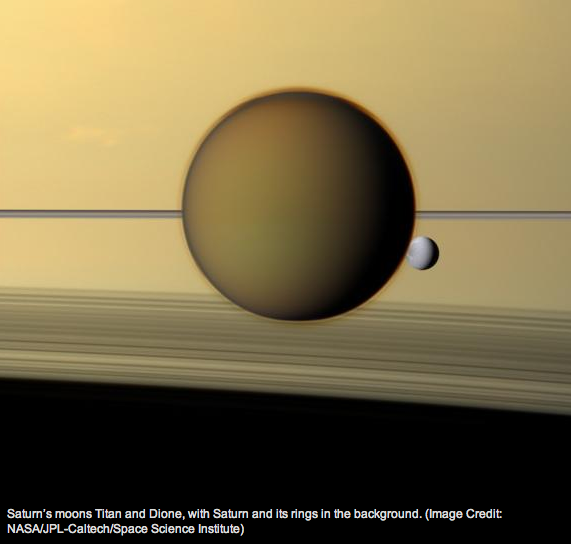
Say you want to visit Titan, to study the bizarre chemistry happening on the surface of Saturn’s fascinating, cloudy moon. After all, Titan has moved to the top of many astrobiologists’ wish list in recent years, as the Cassini spacecraft has beamed back grainy images of methane and ethane lakes. There’s even been talk of a salty liquid water ocean lurking beneath the frigid outer shell.
But as with any space mission, mass and its cousin, volume, are the most prohibitive constraints to inclusion on a payload. Engineers spend years miniaturizing components and trimming milligrams to pack as much scientific might as possible onto a given mission. So how do you maximize scientific productivity while minimizing mass and volume?
via Wired






