

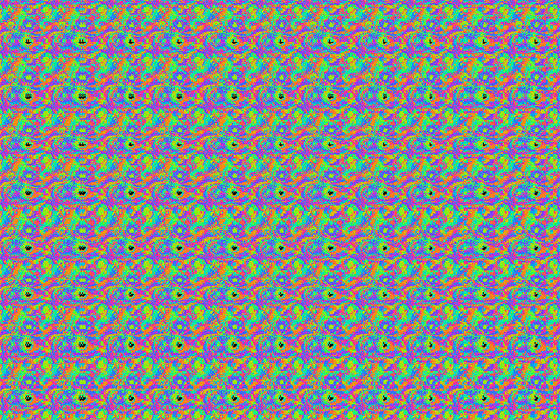
When we discussed how Magic Eye pictures work, a lot of people commented about how they can never see the hidden image. So what gives? Is there something wrong with these people’s eyes? Are they cursed? Are there really no hidden pictures? Is this all a hoax?
Most Magic Eye problems have to do with the way the eyes work with each other and the brain. To view 3D stereo images, your peepers have to work together as a coordinated team. If they’re not pulling together, you’re going to have some glitches in your binocular (two-eyed) vision or stereo vision (where the two slightly different views from your eyes are combined in the brain). A number of things can cause binocular and stereo vision impairment — most commonly, deviations or misalignments of one or both eyes (“crossed eyes” or “wall eyes”), situations where one eye is dominant because visual stimulation either transmits poorly or not at all from the other, astigmatism or cataracts. If you think you have an eye problem, go see an eye doctor who can test and treat your stereo vision.
If your eyes are fine, then your Magic Eye problems could just be a matter of technique.
via Mental Floss






