

fresh bytes
Subscribe Now

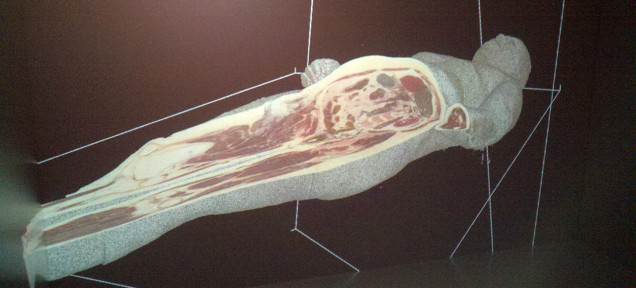
Train for surgery using immersive 3D holograms of corpses

surgerypractice.jpg

Computer-generated models are starting to let researchers and students peer into the body without needing a real human stretched out before them. Virtual dissection tables have been built at places like Stanford and the University of Calgary. Now, University of Michigancomputer scientists and biologists have taken the technology another step forward, using projectors, joysticks and 3-D equipment to build a floating holographic human that users can dissect, manipulate, and put back together as they wish.
via Gizmodo

Continue reading 

Image: University of Michigan

Leave a Reply

featured blogs
Apr 24, 2026
A thought experiment in curiosity, confusion, and cosmic consequences....

featured paper

Quickly and accurately identify inter-domain leakage issues in IC designs

Sponsored by Siemens Digital Industries Software

Power domain leakage is a major IC reliability issue, often missed by traditional tools. This white paper describes challenges of identifying leakage, types of false results, and presents Siemens EDA’s Insight Analyzer. The tool proactively finds true leakage paths, filters out false positives, and helps circuit designers quickly fix risks—enabling more robust, reliable chip designs. With detailed, context-aware analysis, designers save time and improve silicon quality.

Click to read more

featured chalk talk

Analog Output, Isolated Current, & Voltage Sensing Using Isolation Amplifiers
Sponsored by Mouser Electronics and Vishay
In this episode of Chalk Talk, Simon Goodwin from Vishay and Amelia Dalton chat about analog output, and isolated current and voltage sensing using isolation amplifiers. Simon and Amelia also explore the fundamental principles of current and voltage sensing and the variety of voltage and current sensing solutions offered by Vishay that can get your next design up and running in no time.
Apr 27, 2026
5,530 views






