fresh bytes
Subscribe Now

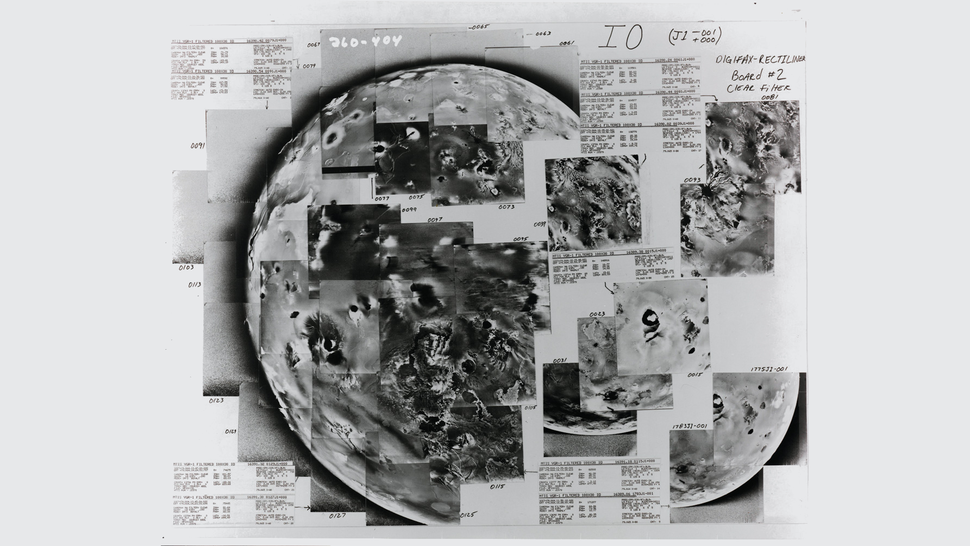
This is how NASA made composite images before photoshop existed

NASAcomposite.png

You might think that this image looks a little bodged together, and you’d be right to. After all, it’s literally a collage of photographs obtained by Voyager I—all the way back in 1979.

Collected when the spacecraft passed Jupiter’s moon Io for the first time, the images were assembled by hand at NASA, revealing for the first time strange craters, smooth plains and gigantic mountains that covered the surface of the moon. More than that, though, they revealed that Io wasn’t the cold wasteland that astrophysicists has believed it to be—rather, it was seething with volcanic activity.
via Gizmodo


Continue reading 

Leave a Reply

featured blogs
May 6, 2026
Hollywood has struck gold with The Lord of the Rings and Dune'”so which sci-fi and fantasy books should filmmakers tackle next?...

featured paper

Want early design analysis without simulation?

Sponsored by Siemens Digital Industries Software

Traditional verification methods are failing today's complex IC designs, which require a proactive, early-stage analysis approach. A shift-left methodology addresses IP block integration challenges and the limitations of traditional simulation and ERC tools. Insight Analyzer detects hard-to-find leakage issues across power domains, enabling early analysis without full simulation. Identify inefficiencies earlier to reduce rework, improve reliability, and enhance power performance.

Click to read more!

featured chalk talk

What’s Driving Zephyr’s Momentum
In this episode of Chalk Talk, Brendon Slade from NXP and Amelia Dalton explore what Zephyr makes unique, how it compares to other RTOS options, and how its design philosophy enables developers to scale from simple prototypes to production-ready systems with confidence.
May 4, 2026
3,592 views