fresh bytes
Subscribe Now

The weird way that standing (not walking) on escalators helps move people more quickly

zaokc8fbwhmxj40esaot.png

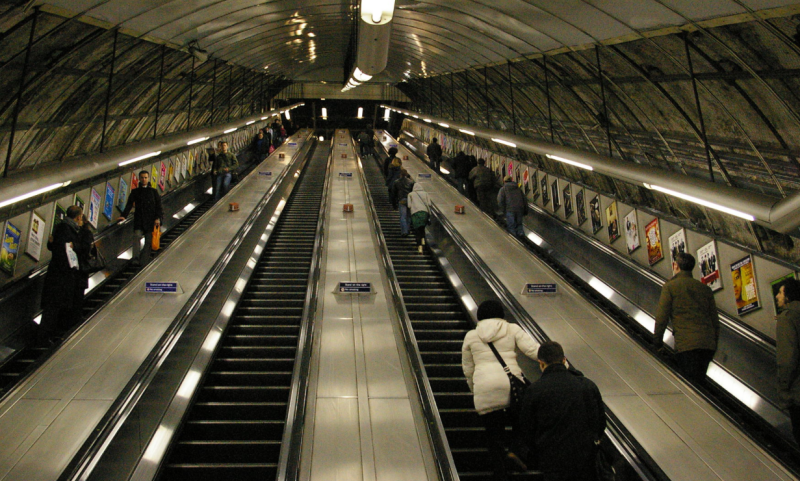
Transport for London is seeing record-high numbers of passengers, which leads to some stations (namely the older, more antiquated ones) becoming overwhelmed with bodies during rush hour. Escalators naturally create bottlenecks when all those people are squeezed into narrower paths, so you’d think that it would improve congestion for the faster-moving people to go ahead and slip past the slower-moving people. 

But no no no! It actually all comes down to two factors: How many stairs passengers need to climb (or descend), and how many passengers end up attempting it. If too many people try to walk up long escalators, it ends up making congestion worse.
via Gizmodo


Continue reading 

Leave a Reply

featured blogs
Apr 2, 2026
Build, code, and explore with your own AI-powered Mars rover kit, inspired by NASA's Perseverance mission....

featured paper

Quickly and accurately identify inter-domain leakage issues in IC designs

Sponsored by Siemens Digital Industries Software

Power domain leakage is a major IC reliability issue, often missed by traditional tools. This white paper describes challenges of identifying leakage, types of false results, and presents Siemens EDA’s Insight Analyzer. The tool proactively finds true leakage paths, filters out false positives, and helps circuit designers quickly fix risks—enabling more robust, reliable chip designs. With detailed, context-aware analysis, designers save time and improve silicon quality.

Click to read more

featured chalk talk

Connecting the World Through Space
Sponsored by Mouser Electronics and Qorvo
In this episode of Chalk Talk, Ryan Jennings from Qorvo and Amelia Dalton explore the critical components and design challenges inherent in LEO satellite infrastructure and how Qorvo’s solutions are enabling the next generation of space-based connectivity. 
Mar 30, 2026
21,758 views