fresh bytes
Subscribe Now

The weird history of pogs

800px-pogslam.jpg

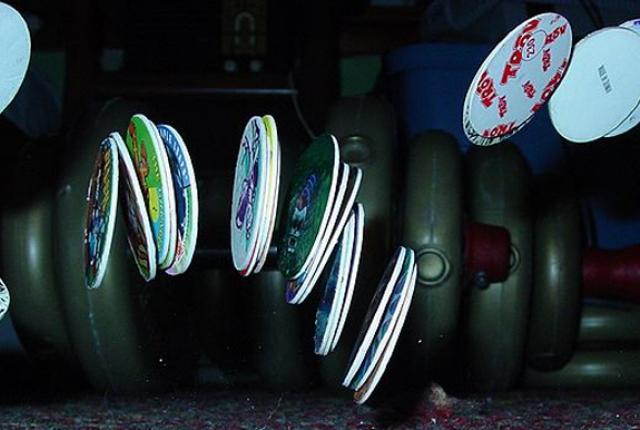
The actual gameplay behind pogs has long been attributed to the classic Japanese game of Menko (above), which has been popular since the Edo Period (between 1603 and 1867) and also centered on players attempting to flip the cards or pieces of their opponent. Much like modern pogs, the original Menko playing pieces were roughly the size of milk caps and featured images of Japanese cultural icons, like wrestlers and warriors. These pieces weren’t made out of cardboard or plastic, but shaped from clay, wood, or ceramics (though Menko later included cardboard pieces that are considered the forerunners of trading cards).

Japanese immigrants then brought the game with them when they settled in Hawaii in the early 20th century. Industrious kids started using milk bottle caps as Menko playing pieces—they were, after all, rigid enough and the right size—and the game of Menko started evolving. 
via Mental Floss

Continue reading 

Leave a Reply

featured blogs
Apr 24, 2026
A thought experiment in curiosity, confusion, and cosmic consequences....

featured paper

Quickly and accurately identify inter-domain leakage issues in IC designs

Sponsored by Siemens Digital Industries Software

Power domain leakage is a major IC reliability issue, often missed by traditional tools. This white paper describes challenges of identifying leakage, types of false results, and presents Siemens EDA’s Insight Analyzer. The tool proactively finds true leakage paths, filters out false positives, and helps circuit designers quickly fix risks—enabling more robust, reliable chip designs. With detailed, context-aware analysis, designers save time and improve silicon quality.

Click to read more

featured chalk talk

Analog Output, Isolated Current, & Voltage Sensing Using Isolation Amplifiers
Sponsored by Mouser Electronics and Vishay
In this episode of Chalk Talk, Simon Goodwin from Vishay and Amelia Dalton chat about analog output, and isolated current and voltage sensing using isolation amplifiers. Simon and Amelia also explore the fundamental principles of current and voltage sensing and the variety of voltage and current sensing solutions offered by Vishay that can get your next design up and running in no time.
Apr 27, 2026
6,975 views