

fresh bytes
Subscribe Now

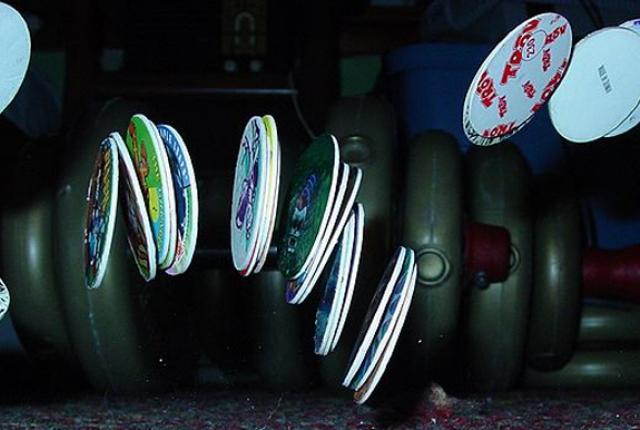
The weird history of pogs

800px-pogslam.jpg

The actual gameplay behind pogs has long been attributed to the classic Japanese game of Menko (above), which has been popular since the Edo Period (between 1603 and 1867) and also centered on players attempting to flip the cards or pieces of their opponent. Much like modern pogs, the original Menko playing pieces were roughly the size of milk caps and featured images of Japanese cultural icons, like wrestlers and warriors. These pieces weren’t made out of cardboard or plastic, but shaped from clay, wood, or ceramics (though Menko later included cardboard pieces that are considered the forerunners of trading cards).

Japanese immigrants then brought the game with them when they settled in Hawaii in the early 20th century. Industrious kids started using milk bottle caps as Menko playing pieces—they were, after all, rigid enough and the right size—and the game of Menko started evolving. 
via Mental Floss

Continue reading 

Leave a Reply

featured blogs
Jan 7, 2026
After watching these videos, it's hard to argue with the sentiment 'There should be a Nobel Prize for engineering, not just in physics and chemistry.'...

featured video

Revolutionizing AI Chip Development: Synopsys Solutions for the Future

Sponsored by Synopsys

In the AI era, demand for advanced chips is soaring, creating scaling and power challenges. Discover how Synopsys accelerates AI chip development with innovative solutions, robust partnerships, and cutting-edge silicon IP for first-pass silicon success.

Click here for more information

featured chalk talk

eUSB2 Redriver (Non-Retiming Repeater)
In this episode of Chalk Talk, Dong Nguyen from NXP and Amelia Dalton explore the features of NXP’s PTN3222 eUSB Redriver. They investigate how it overcomes signal integrity challenges and why it’s the ideal solution for ensuring seamless compatibility between your cutting-edge silicon and the world of standard USB 2.0.
Jan 12, 2026
0 views




