fresh bytes
Subscribe Now

The Large Hadron Collider is so sensitive it’s affected by the Moon

lhc.jpg

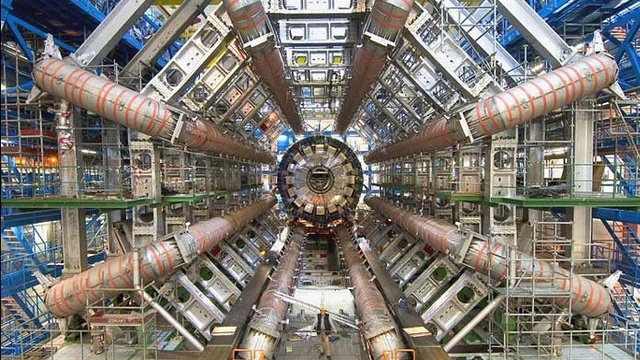
The Large Hadron Collider is a beacon of all that’s great about science and engineering—but that doesn’t mean it always works properly. In fact, the facility is so sensitive that even the moon’s gravitational pull affects how well it operates.

Over at Quantum Diaries, the LHC’s Pauline Gagnon explains that the changing gravitational forces exerted by the moon—which are what drives the tides—cause tiny shifts in the position of hardware within the collider. Because the LHC has a circumference of nearly 27km, those small shifts are amplified, which means that the incredibly sensitive device is thrown off track, and the proton beams begin to miss each other.
via Gizmodo

Continue reading 

Image by Image Editor under Creative Commons license

Leave a Reply

featured blogs
May 6, 2026
Hollywood has struck gold with The Lord of the Rings and Dune'”so which sci-fi and fantasy books should filmmakers tackle next?...

featured paper

Quickly and accurately identify inter-domain leakage issues in IC designs

Sponsored by Siemens Digital Industries Software

Power domain leakage is a major IC reliability issue, often missed by traditional tools. This white paper describes challenges of identifying leakage, types of false results, and presents Siemens EDA’s Insight Analyzer. The tool proactively finds true leakage paths, filters out false positives, and helps circuit designers quickly fix risks—enabling more robust, reliable chip designs. With detailed, context-aware analysis, designers save time and improve silicon quality.

Click to read more

featured chalk talk

What’s Driving Zephyr’s Momentum
In this episode of Chalk Talk, Brendon Slade from NXP and Amelia Dalton explore what Zephyr makes unique, how it compares to other RTOS options, and how its design philosophy enables developers to scale from simple prototypes to production-ready systems with confidence.
May 4, 2026
14,958 views