fresh bytes
Subscribe Now

The accidental history of the @ symbol

@

Called the “snail” by Italians and the “monkey tail” by the Dutch, @ is the sine qua non of electronic communication, thanks to e-mail addresses and Twitter handles. @ has even been inducted into the permanent collection of the Museum of Modern Art, which cited its modern use as an example of “elegance, economy, intellectual transparency, and a sense of the possible future directions that are embedded in the arts of our time.”

The origin of the symbol itself, one of the most graceful characters on the keyboard, is something of a mystery. One theory is that medieval monks, looking for shortcuts while copying manuscripts, converted the Latin word for “toward”—ad—to “a” with the back part of the “d” as a tail. Or it came from the French word for “at”—à—and scribes, striving for efficiency, swept the nib of the pen around the top and side. Or the symbol evolved from an abbreviation of “each at”—the “a” being encased by an “e.” The first documented use was in 1536, in a letter by Francesco Lapi, a Florentine merchant, who used @ to denote units of wine called amphorae, which were shipped in large clay jars.
via Smithsonian

Continue reading 

Leave a Reply

featured blogs
May 6, 2026
Hollywood has struck gold with The Lord of the Rings and Dune'”so which sci-fi and fantasy books should filmmakers tackle next?...

featured paper

Quickly and accurately identify inter-domain leakage issues in IC designs

Sponsored by Siemens Digital Industries Software

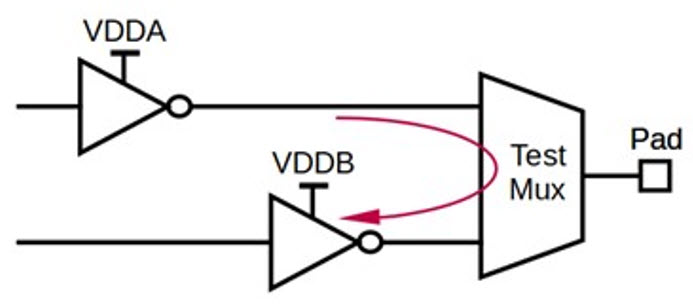
Power domain leakage is a major IC reliability issue, often missed by traditional tools. This white paper describes challenges of identifying leakage, types of false results, and presents Siemens EDA’s Insight Analyzer. The tool proactively finds true leakage paths, filters out false positives, and helps circuit designers quickly fix risks—enabling more robust, reliable chip designs. With detailed, context-aware analysis, designers save time and improve silicon quality.

Click to read more

featured chalk talk

GaN for Humanoid Robots
Sponsored by Mouser Electronics and Infineon
In this episode of Chalk Talk, Eric Persson and Amelia Dalton explore why power is the key driver for efficient and reliable robot movements and how GaN technologies can help motor control solutions be more compact, integrated and efficient. They also investigate the role of field-oriented control in humanoid robotic applications and why the choice of a GaN power transistor can make all the difference in your next humanoid robot project!
Apr 20, 2026
26,179 views