

fresh bytes
Subscribe Now

Teenager develops new system to stop the spread of germs on airplanes

airplane-germs-primary.png

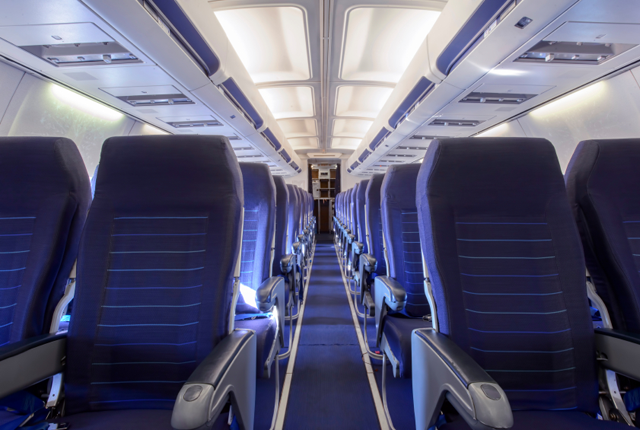
With rows upon rows of people squeezed into cramped seats, it’s hard not to imagine the clouds of germs that could be circulating throughout the cabin.

Fortunately, 17-year-old Raymond Wang has a solution. The teenage scientist created a small device that he says could increase fresh air inhalation on airplanes by as much as 190 percent.

In a recent TED Talk, Wang explained that each time a person sneezes on an airplane, that sneeze circulates the entire airplane cabin before being filtered out by vents on the sides of the plane. Essentially, a single sneeze can end up flowing past several rows of people, all of whom are potentially inhaling its pathogens.
via Mental Floss


Continue reading 

Leave a Reply

featured blogs
Apr 2, 2026
Build, code, and explore with your own AI-powered Mars rover kit, inspired by NASA's Perseverance mission....

featured paper

Quickly and accurately identify inter-domain leakage issues in IC designs

Sponsored by Siemens Digital Industries Software

Power domain leakage is a major IC reliability issue, often missed by traditional tools. This white paper describes challenges of identifying leakage, types of false results, and presents Siemens EDA’s Insight Analyzer. The tool proactively finds true leakage paths, filters out false positives, and helps circuit designers quickly fix risks—enabling more robust, reliable chip designs. With detailed, context-aware analysis, designers save time and improve silicon quality.

Click to read more

featured chalk talk

Connecting the World Through Space
Sponsored by Mouser Electronics and Qorvo
In this episode of Chalk Talk, Ryan Jennings from Qorvo and Amelia Dalton explore the critical components and design challenges inherent in LEO satellite infrastructure and how Qorvo’s solutions are enabling the next generation of space-based connectivity. 
Mar 30, 2026
21,758 views




