

fresh bytes
Subscribe Now

Stanford researchers ‘cool’ sunlight to improve solar cell efficiency

487256142.jpg

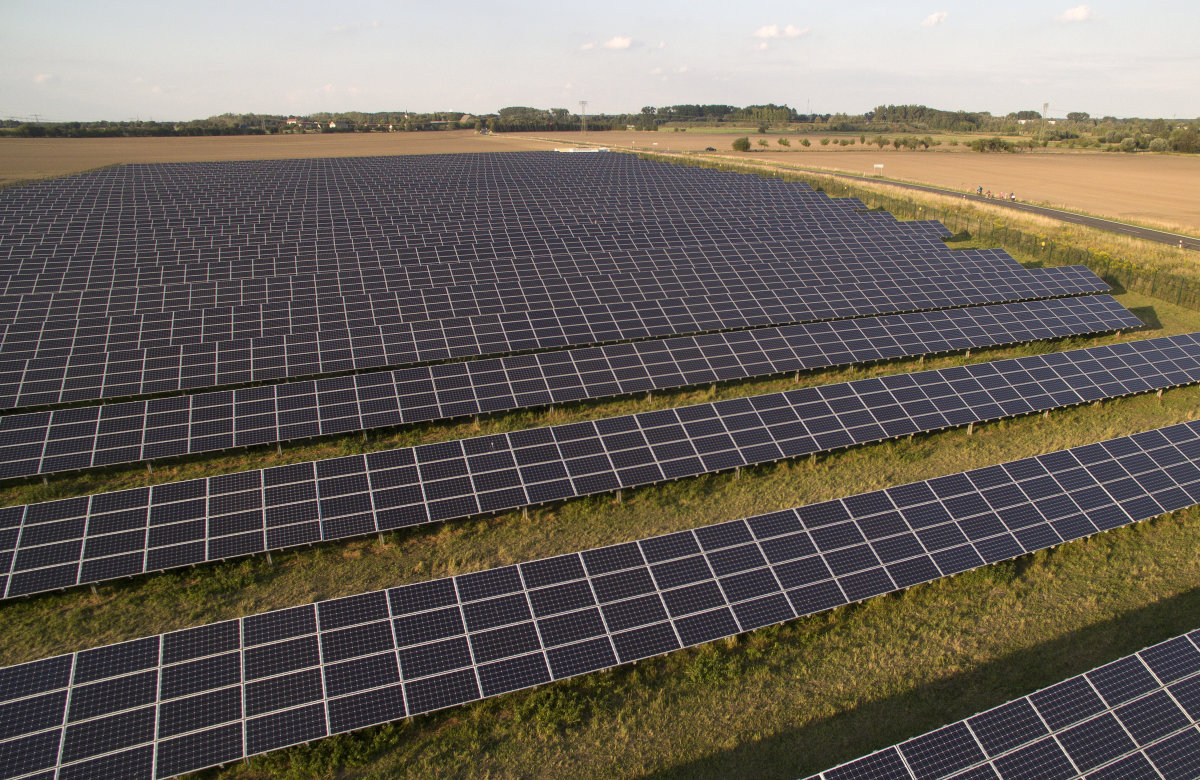
A team of researchers from Stanford University have devised an ingenious means of boosting the efficiency of solar panels by exploiting a fundamental physics phenomenon. Solar panels lose efficiency as they heat up. Just as the top of your head radiates excess body heat as infrared light, the researchers have developed a translucent overlay comprised of patterned silica that does the same for solar panels. The overlay separates the visible spectrum of light (which generates electricity) from its thermal radiation (aka heat), effectively “cooling” the incoming light, radiating the heat away from the panel while allowing more photons to be converted into electricity. The team, led by Stanford professor Shanhui Fan, recently published their findings in the journal, Proceedings of the National Academy of Sciences.
via Engadget

Continue reading 

Leave a Reply

featured blogs
Apr 2, 2026
Build, code, and explore with your own AI-powered Mars rover kit, inspired by NASA's Perseverance mission....

featured paper

Quickly and accurately identify inter-domain leakage issues in IC designs

Sponsored by Siemens Digital Industries Software

Power domain leakage is a major IC reliability issue, often missed by traditional tools. This white paper describes challenges of identifying leakage, types of false results, and presents Siemens EDA’s Insight Analyzer. The tool proactively finds true leakage paths, filters out false positives, and helps circuit designers quickly fix risks—enabling more robust, reliable chip designs. With detailed, context-aware analysis, designers save time and improve silicon quality.

Click to read more

featured chalk talk

GaN for Humanoid Robots
Sponsored by Mouser Electronics and Infineon
In this episode of Chalk Talk, Eric Persson and Amelia Dalton explore why power is the key driver for efficient and reliable robot movements and how GaN technologies can help motor control solutions be more compact, integrated and efficient. They also investigate the role of field-oriented control in humanoid robotic applications and why the choice of a GaN power transistor can make all the difference in your next humanoid robot project!
Apr 20, 2026
703 views





