fresh bytes
Subscribe Now

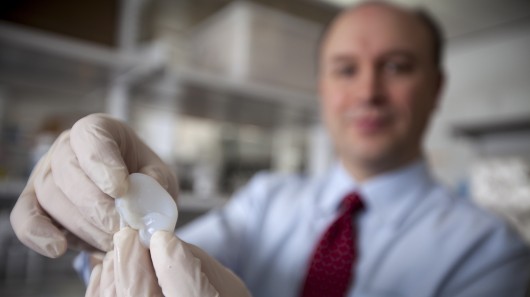
Scientists use 3D printer and cartilage cells to create artificial ears

3dears.jpg

When a child is born with the congenital deformity known as microtia, they have an underdeveloped external ear – also known as the pinna. Even though their inner ear may be normal, the lack of the external structure can affect their hearing, plus it looks unusual. Normally, a replacement pinna is made from a foam-like material (or sometimes even cartilage from the rib cage) and implanted under the skin, although these don’t always look particularly natural. Now, scientists from Cornell University have developed a more realistic pinna grown from biological material, using a 3D printer.
via Gizmag

Continue reading

Image: Lindsay France/Cornell University Photography

Leave a Reply

featured blogs
May 6, 2026
Hollywood has struck gold with The Lord of the Rings and Dune'”so which sci-fi and fantasy books should filmmakers tackle next?...

featured paper

Want early design analysis without simulation?

Sponsored by Siemens Digital Industries Software

Traditional verification methods are failing today's complex IC designs, which require a proactive, early-stage analysis approach. A shift-left methodology addresses IP block integration challenges and the limitations of traditional simulation and ERC tools. Insight Analyzer detects hard-to-find leakage issues across power domains, enabling early analysis without full simulation. Identify inefficiencies earlier to reduce rework, improve reliability, and enhance power performance.

Click to read more!

featured chalk talk

What’s Driving Zephyr’s Momentum
In this episode of Chalk Talk, Brendon Slade from NXP and Amelia Dalton explore what Zephyr makes unique, how it compares to other RTOS options, and how its design philosophy enables developers to scale from simple prototypes to production-ready systems with confidence.
May 4, 2026
11,833 views