

fresh bytes
Subscribe Now

Scientists grow miniature human brain in a lab

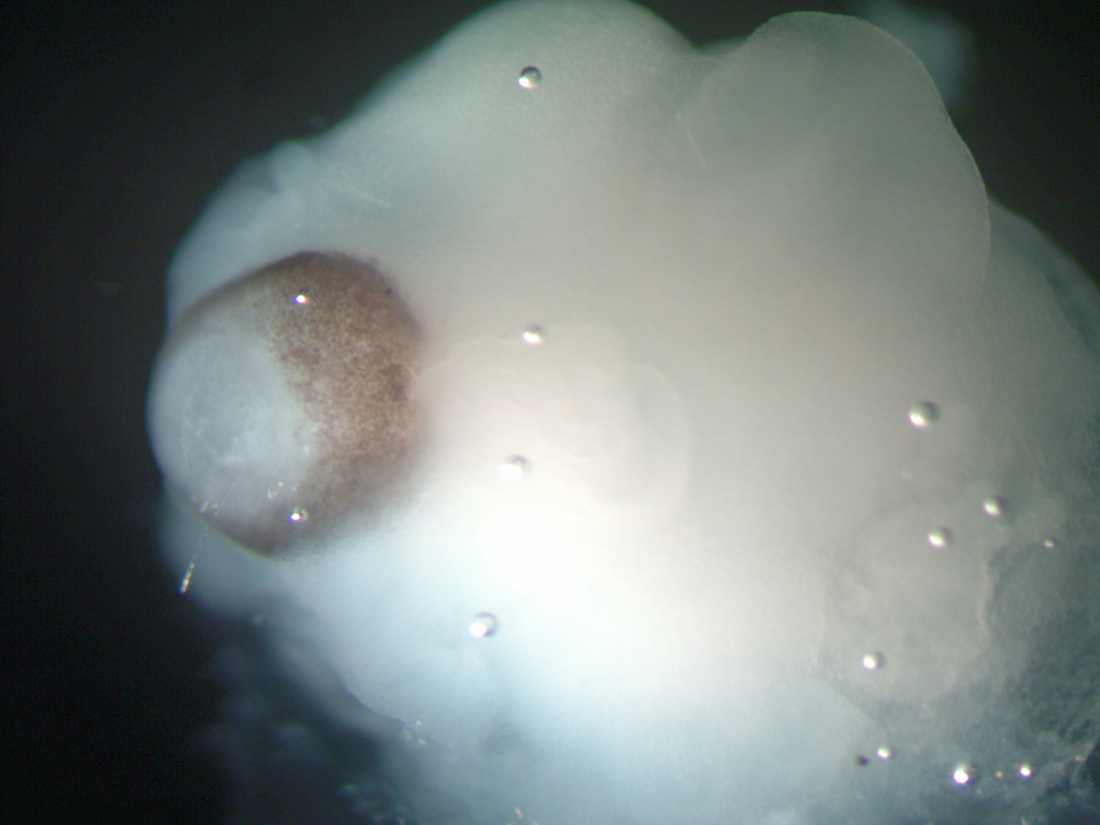
Organoid_with_retina.jpg

The lab-made organ is known as a “mini-brain” for a reason. Researchers say that the brains — which they refer to as “cerebral organoids” — typically grew to no larger than 3 to 4 milimeters in diameter. But for the first nine weeks of development, the organoids “look very similar to the human embryo” and “display discrete regions that resemble different areas of the early developing human brain,” says Madeline A. Lancaster, PhD, lead author on the paper outlining the research.

Specifically, the organoids grown in the lab have a dorsal cortex (the largest part of the brain), ventral forebrain, choroid plexus (which generates cerebrospinal fluid), midbrain and hindbrain (which form the brainstem), and even a retina. These regions developed on their own in cultures, and while they each resemble an immature human brain, they aren’t located in the right positions. Jürgen Knoblich likened the lab-grown organoid to a car with its engine on the roof and its transmission in the trunk — it doesn’t completely function or look like a human brain, but the individual parts are accurate.
via The Verge


Continue reading 

Leave a Reply

featured blogs
May 6, 2026
Hollywood has struck gold with The Lord of the Rings and Dune'”so which sci-fi and fantasy books should filmmakers tackle next?...

featured paper

Quickly and accurately identify inter-domain leakage issues in IC designs

Sponsored by Siemens Digital Industries Software

Power domain leakage is a major IC reliability issue, often missed by traditional tools. This white paper describes challenges of identifying leakage, types of false results, and presents Siemens EDA’s Insight Analyzer. The tool proactively finds true leakage paths, filters out false positives, and helps circuit designers quickly fix risks—enabling more robust, reliable chip designs. With detailed, context-aware analysis, designers save time and improve silicon quality.

Click to read more

featured chalk talk

GaN for Humanoid Robots
Sponsored by Mouser Electronics and Infineon
In this episode of Chalk Talk, Eric Persson and Amelia Dalton explore why power is the key driver for efficient and reliable robot movements and how GaN technologies can help motor control solutions be more compact, integrated and efficient. They also investigate the role of field-oriented control in humanoid robotic applications and why the choice of a GaN power transistor can make all the difference in your next humanoid robot project!
Apr 20, 2026
18,753 views




