

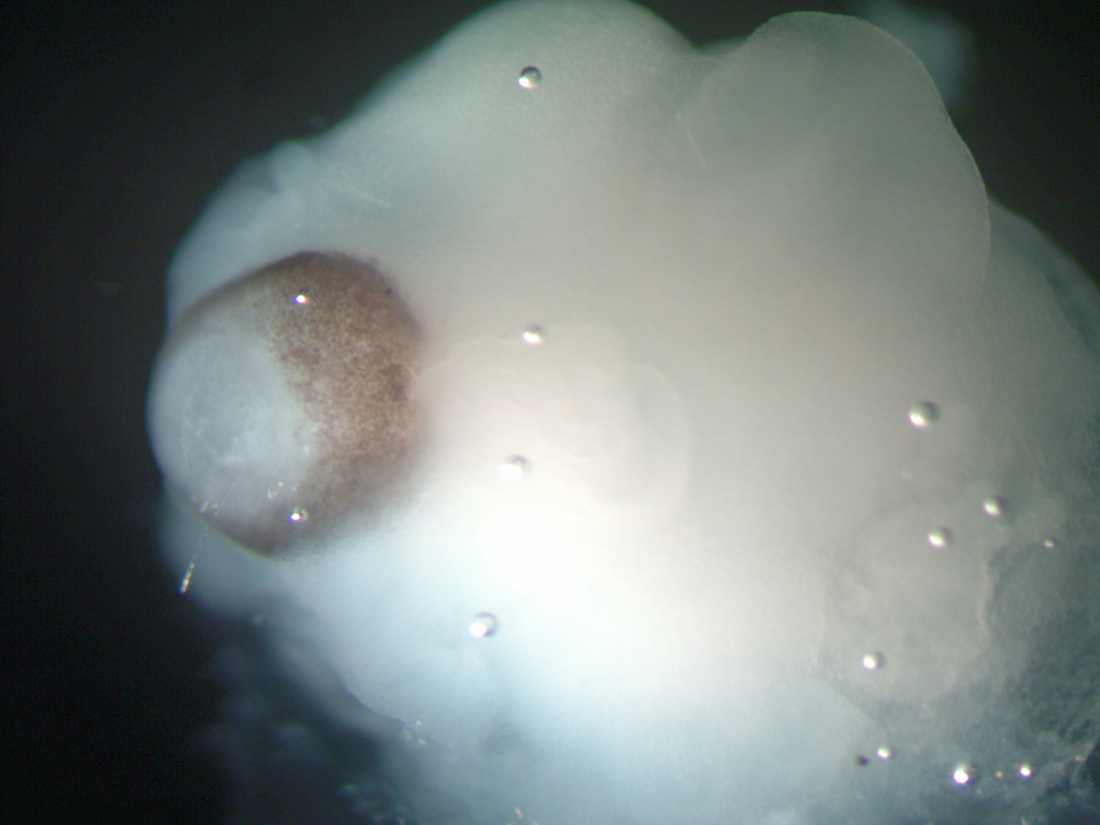
The lab-made organ is known as a “mini-brain” for a reason. Researchers say that the brains — which they refer to as “cerebral organoids” — typically grew to no larger than 3 to 4 milimeters in diameter. But for the first nine weeks of development, the organoids “look very similar to the human embryo” and “display discrete regions that resemble different areas of the early developing human brain,” says Madeline A. Lancaster, PhD, lead author on the paper outlining the research.
Specifically, the organoids grown in the lab have a dorsal cortex (the largest part of the brain), ventral forebrain, choroid plexus (which generates cerebrospinal fluid), midbrain and hindbrain (which form the brainstem), and even a retina. These regions developed on their own in cultures, and while they each resemble an immature human brain, they aren’t located in the right positions. Jürgen Knoblich likened the lab-grown organoid to a car with its engine on the roof and its transmission in the trunk — it doesn’t completely function or look like a human brain, but the individual parts are accurate.
via The Verge






