A team of American and European researchers have confirmed that the Cretaceous-Paleogene extinction — the event that wiped out roughly 75% of the planet’s species, including almost every dinosaur — was caused by an asteroid impact in Mexico 66 million years ago. The Cretaceous–Paleogene extinction was the last great extinction event to occur on Earth, and is most notable for causing the diversification of mammals that eventually resulted in Homo sapiens.
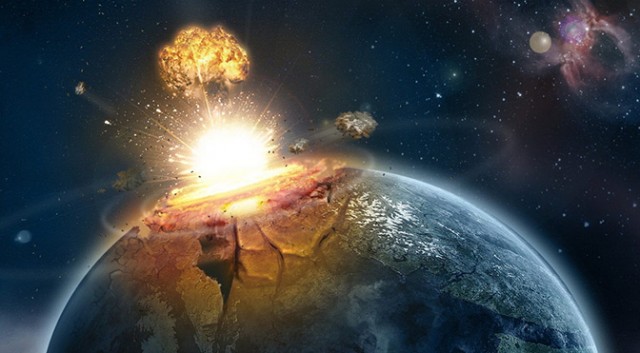
66 million years ago an asteroid roughly 15 kilometers (9 miles) wide hurtled into Chicxulub, Mexico. The collision, which left behind a 180-kilometer (110-mile) crater, released 420 zettajoules of energy — 100 teratonnes of TNT, or roughly two million times stronger than the largest thermonuclear device ever used (the Russian Tsar Bomba). The impact created a huge dust cloud that blocked out the Sun, starting the extinction ball rolling by killing off much of the world’s plants, and thus the herbivores soon after. Due to high levels of oxygen in the Cretaceous atmosphere, the impact may also have caused intense, global firestorms that killed off many other species. Because the asteroid landed in the ocean, megatsunamis would’ve swept the world’s coasts, too.
Until now, though, there hasn’t been enough evidence that the Chicxulub impact actuallycaused the Cretaceous-Paleogene extinction.
via Extreme Tech