fresh bytes
Subscribe Now

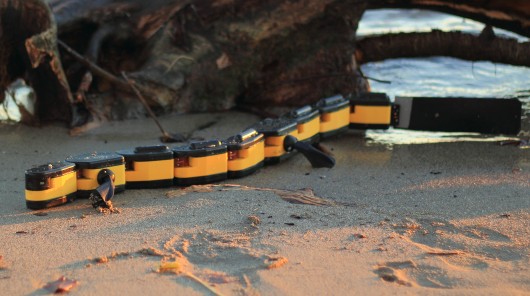
Salamandra robotica II moves swiftly on both land and water

salamandra-robotica-ii.jpg

Scientists have often taken inspiration from the animal world in robotic designs, with bots modeled after fish, sandfish lizards, and even sea turtles. Such biomimicry makes sense – if you want a robot to move a certain way, why not look to creatures that already can? With the Salamandra robotica II, researchers have tried to replicate the movement of a salamander in designing a robot that can walk or crawl on land as easily as it swims in the water.
via Gizmag

Continue reading

Image: Kostas Karakasiliotis, Biorobotics Laboratory, EPFL

Leave a Reply

featured blogs
May 6, 2026
Hollywood has struck gold with The Lord of the Rings and Dune'”so which sci-fi and fantasy books should filmmakers tackle next?...

featured paper

Want early design analysis without simulation?

Sponsored by Siemens Digital Industries Software

Traditional verification methods are failing today's complex IC designs, which require a proactive, early-stage analysis approach. A shift-left methodology addresses IP block integration challenges and the limitations of traditional simulation and ERC tools. Insight Analyzer detects hard-to-find leakage issues across power domains, enabling early analysis without full simulation. Identify inefficiencies earlier to reduce rework, improve reliability, and enhance power performance.

Click to read more!

featured chalk talk

Analog Output, Isolated Current, & Voltage Sensing Using Isolation Amplifiers
Sponsored by Mouser Electronics and Vishay
In this episode of Chalk Talk, Simon Goodwin from Vishay and Amelia Dalton chat about analog output, and isolated current and voltage sensing using isolation amplifiers. Simon and Amelia also explore the fundamental principles of current and voltage sensing and the variety of voltage and current sensing solutions offered by Vishay that can get your next design up and running in no time.
Apr 27, 2026
16,719 views