fresh bytes
Subscribe Now

Researchers identify how cells get their orders to heal wounds

mysteries-wound-healing-leader-cells.png

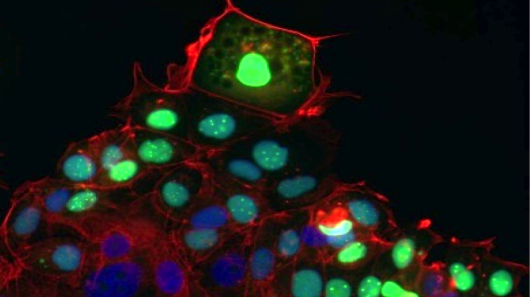
When you cut on your finger or scrape your knee, cells rush to the wound and repair or replace the damaged tissue. But how exactly this works – in particular how certain cells become “leaders” in the process – has long been a mystery. Now researchers at the University of Arizona (UA) have identified the mechanisms that cause and regulate this collective cell migration. Armed with this knowledge, biomedical engineers will be able to design new tissue regeneration treatments for diabetes and heart disease as well as for slowing or stopping the spread of cancer.

Leader cells earn their name for being the genetic messengers that move at the front of a cell group migrating to a wound. The UA researchers found that leader cells get their orders from a protein molecule called DII4, which acts as coordinator for the whole process. Nearby cells get sent to heal the wound, with identical cells specializing into leader and follower cells. The leader cells send signals to the follower cells, which have none of the messenger RNA from the DII4 protein, and this continues until new tissue covers the wound.
via Gizmag

Continue reading 

Image: Pak Wong

Leave a Reply

featured blogs
Apr 24, 2026
A thought experiment in curiosity, confusion, and cosmic consequences....

featured paper

Quickly and accurately identify inter-domain leakage issues in IC designs

Sponsored by Siemens Digital Industries Software

Power domain leakage is a major IC reliability issue, often missed by traditional tools. This white paper describes challenges of identifying leakage, types of false results, and presents Siemens EDA’s Insight Analyzer. The tool proactively finds true leakage paths, filters out false positives, and helps circuit designers quickly fix risks—enabling more robust, reliable chip designs. With detailed, context-aware analysis, designers save time and improve silicon quality.

Click to read more

featured chalk talk

Nexperia GaN Power Proliferating in All Things Motor Control/Drive
Sponsored by Mouser Electronics and Nexperia
In this episode of Chalk Talk, Art Gonsky from Nexperia and Amelia Dalton discuss the biggest challenges of electric motors and controllers and how GaN power solutions can help solve these issues. They  also investigate how silicon, silicon carbide and GaN power solutions compare and how Nexperia and NXP technologies can get your next motor control design up and running in no time!     
Mar 25, 2026
28,872 views