fresh bytes
Subscribe Now

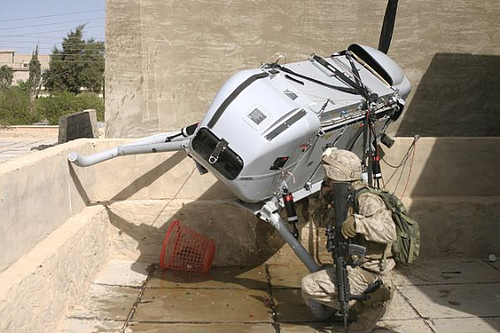
Pushing the wrong button: Bad button placement leads to drone crashes

dronecrash.jpg

Unmanned aircraft crash. In fact, they crash a lot—though there’s no recent specific data, the Congressional Research Service reported last year that despite improvements, “the accident rate for unmanned aircraft is still far above that of manned aircraft.” And while many of those accidents can be attributed to being exposed to hostile fire or operating in conditions when aircraft normally wouldn’t, a significant percentage of drone crashes is caused by human error. A December 2004 FAA study of Defense Department drone crashes found human factors to be a causal factor in about a third of the cases they examined.

But as four human factors engineering researchers have found, sometimes the accidents are by design. That is, the design of the systems that operators use to fly them are so bad that they invite accidents.
via Ars Technica

Continue reading

Image: US Marine Corps 

Leave a Reply

featured blogs
May 6, 2026
Hollywood has struck gold with The Lord of the Rings and Dune'”so which sci-fi and fantasy books should filmmakers tackle next?...

featured paper

Want early design analysis without simulation?

Sponsored by Siemens Digital Industries Software

Traditional verification methods are failing today's complex IC designs, which require a proactive, early-stage analysis approach. A shift-left methodology addresses IP block integration challenges and the limitations of traditional simulation and ERC tools. Insight Analyzer detects hard-to-find leakage issues across power domains, enabling early analysis without full simulation. Identify inefficiencies earlier to reduce rework, improve reliability, and enhance power performance.

Click to read more!

featured chalk talk

GaN for Humanoid Robots
Sponsored by Mouser Electronics and Infineon
In this episode of Chalk Talk, Eric Persson and Amelia Dalton explore why power is the key driver for efficient and reliable robot movements and how GaN technologies can help motor control solutions be more compact, integrated and efficient. They also investigate the role of field-oriented control in humanoid robotic applications and why the choice of a GaN power transistor can make all the difference in your next humanoid robot project!
Apr 20, 2026
25,037 views