fresh bytes
Subscribe Now

Physicist shows why your WiFi sucks in that one room

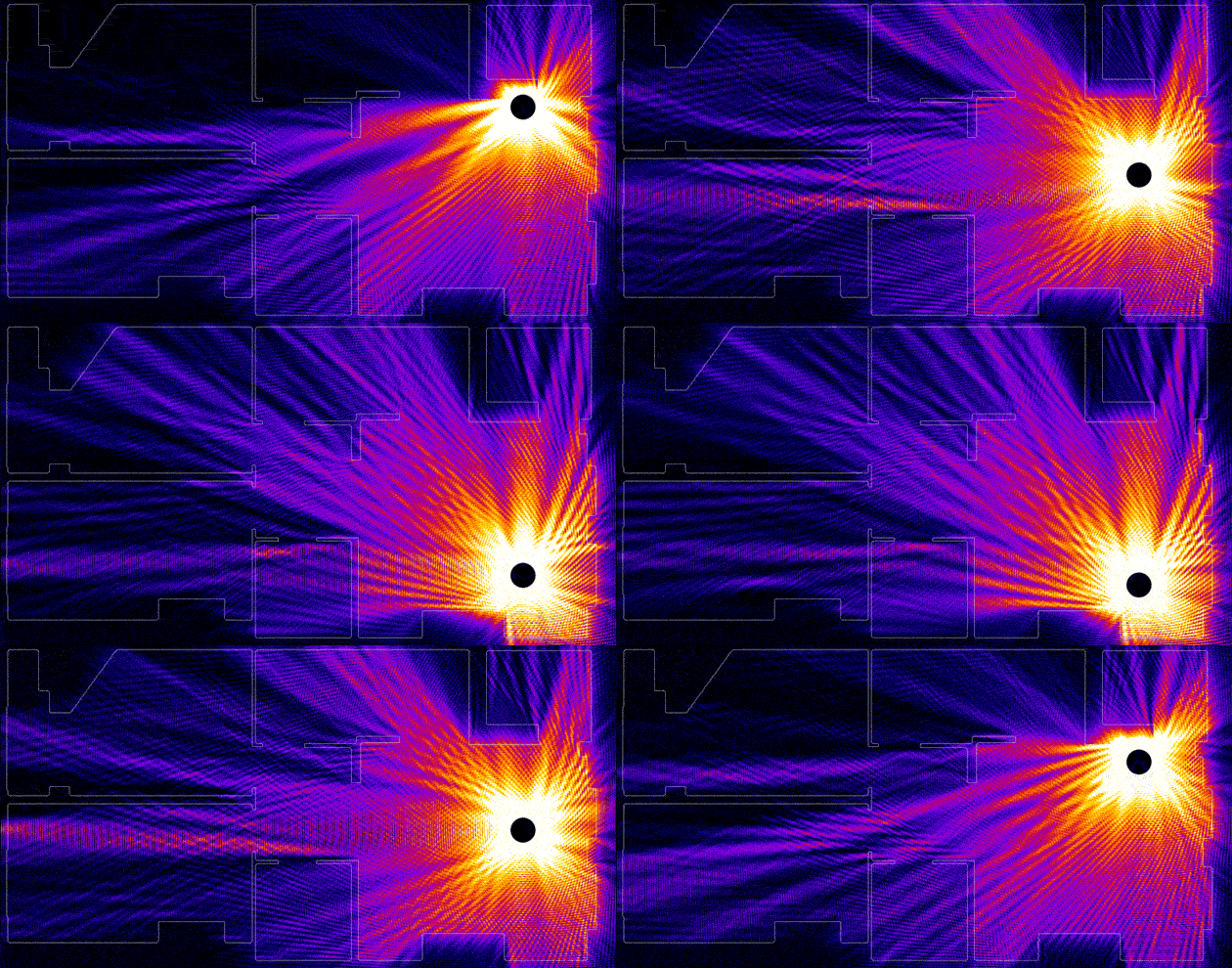
wifi-apartment-2014-09-01-01.gif

If WiFi can track a heartbeat through walls, why can’t I get internet in my corner bathroom? Jason Cole was trying to figure that out too, but unlike me, he’s a PhD student in physics. So he mapped his own apartment and assigned refraction values to the walls (shown above), then applied so-called Hemholtz equations to model the electromagnetic waves. As detailed in his (math-drenched) blog, the best spot for his router was where you’d expect: directly in the center. Since that was out of the question, he was still able to get “tendrils” of internet by placing it in the corner of the apartment. His experiment implies that even in a distant room you could eke some connectivity by judiciously shifting around your laptop. Some of his readers want him to turn into a WiFi mapping web service — unfortunately, he thinks the idea is “unfeasible” due to the processing time and assumptions made.
via Engadget


Continue reading 

Leave a Reply

featured blogs
Apr 24, 2026
A thought experiment in curiosity, confusion, and cosmic consequences....

featured paper

Quickly and accurately identify inter-domain leakage issues in IC designs

Sponsored by Siemens Digital Industries Software

Power domain leakage is a major IC reliability issue, often missed by traditional tools. This white paper describes challenges of identifying leakage, types of false results, and presents Siemens EDA’s Insight Analyzer. The tool proactively finds true leakage paths, filters out false positives, and helps circuit designers quickly fix risks—enabling more robust, reliable chip designs. With detailed, context-aware analysis, designers save time and improve silicon quality.

Click to read more

featured chalk talk

Analog Output, Isolated Current, & Voltage Sensing Using Isolation Amplifiers
Sponsored by Mouser Electronics and Vishay
In this episode of Chalk Talk, Simon Goodwin from Vishay and Amelia Dalton chat about analog output, and isolated current and voltage sensing using isolation amplifiers. Simon and Amelia also explore the fundamental principles of current and voltage sensing and the variety of voltage and current sensing solutions offered by Vishay that can get your next design up and running in no time.
Apr 27, 2026
20 views