fresh bytes
Subscribe Now

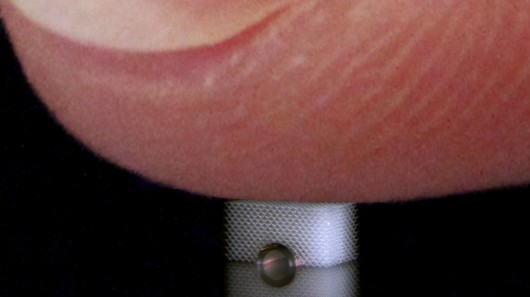
New “invisibility cloak” keeps objects from being felt

invisibility-cloak-touch.jpg

The research team’s method relies on a metamaterial – a material that exhibits properties not usually found in natural materials – that consists of a three-dimensional polymer microstructure formed by needle-shaped cones. This metamaterial structure is built around the object to be hidden, with its mechanical properties dictated by those of the object.

Cloaking requires that an object be isolated from, and made to externally appear just like, its surroundings for all conditions. In optics, this feat is accomplished with help from an opaque metal wall, and in heat conduction by a thermally insulating wall. To make an “unfeelability cloak,” you need a rigid wall around which a structure can be wrapped to make the interior feel identical to the surrounding.
via Gizmag

Continue reading

Image: T Bückmann / KIT

Leave a Reply

featured blogs
Apr 24, 2026
A thought experiment in curiosity, confusion, and cosmic consequences....

featured paper

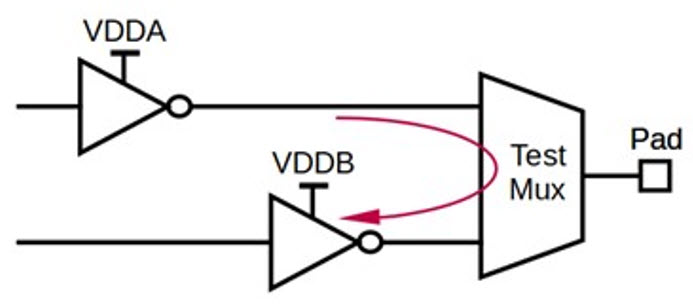
Quickly and accurately identify inter-domain leakage issues in IC designs

Sponsored by Siemens Digital Industries Software

Power domain leakage is a major IC reliability issue, often missed by traditional tools. This white paper describes challenges of identifying leakage, types of false results, and presents Siemens EDA’s Insight Analyzer. The tool proactively finds true leakage paths, filters out false positives, and helps circuit designers quickly fix risks—enabling more robust, reliable chip designs. With detailed, context-aware analysis, designers save time and improve silicon quality.

Click to read more

featured chalk talk

GaN for Humanoid Robots
Sponsored by Mouser Electronics and Infineon
In this episode of Chalk Talk, Eric Persson and Amelia Dalton explore why power is the key driver for efficient and reliable robot movements and how GaN technologies can help motor control solutions be more compact, integrated and efficient. They also investigate the role of field-oriented control in humanoid robotic applications and why the choice of a GaN power transistor can make all the difference in your next humanoid robot project!
Apr 20, 2026
8,186 views