

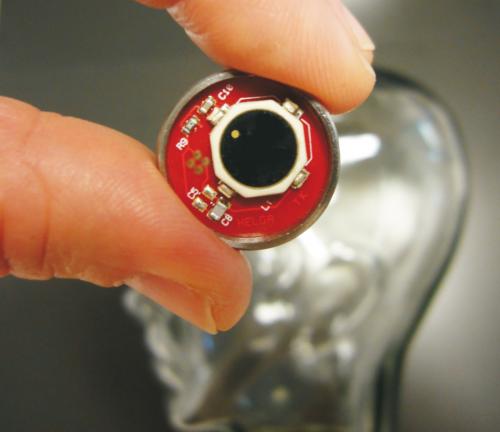
To this day it remains a mystery why the cerebral pressure in certain people suddenly increases. The consequences, however, are better understood: The blood circulation is disrupted and after a while parts of the brain may die off, similar to what occurs in a stroke. This is how dementia takes its insidious path. Experts estimate that up to ten percent of all cases of dementia in Europe can be attributed to rising blood pressure in the brain. Still, making the diagnosis is tough. People with a heightened susceptibility to a rise in intracranial pressure must be treated with intensive medical care today. A probe is inserted that goes from the outside through the skullcap to the brain. The cable keeps the patient connected to the measuring apparatus. Since cerebral pressure fluctuates, it takes extensive measurements in order to reach a definitive diagnosis of this disease. Patients therefore have to stay in hospital typically for several days, and sometimes even weeks.
via phys.org
Image: View of the not yet completely enclosed intracranial pressure sensor. Credit: Fraunhofer IBMT






