fresh bytes
Subscribe Now

New federal rules will force scientists to use more female lab animals

Screen_Shot_2014-05-14_at_10.24.18_PM.png

Starting in October, biomedical researchers will have to counterbalance their use of male animals and cells with the equivalent in female biological tissues and test subjects. At least that’s what they’ll have to do if they want to get funding from the US National Institutes of Health (NIH), the largest source of medical-research funding in the world. This change, NIH researchers announced in Nature today, will help close the sex gap that continues to exist in preclinical research — the research stage in which drugs and medical interventions are tested on animals and biological tissues — and will “ensure that the health of the United States is being served by supporting science that meets the highest standards of rigor.”

Over the last two decades, researchers have identified a plethora of differences in the way women and men react to various drugs and develop diseases. Women, for instance, are more susceptible to multiple sclerosis than men, even though their symptoms are less serious. And some drugs, such as the sleeping aid Ambien, need to be prescribed in different doses depending on a patient’s sex. But preclinical research continues to include a majority of male animals and tissues. In fact, many trials don’t include female animals at all. This, some researchers say, might explain the higher rate of adverse drug reactions seen in women today.
via The Verge

Continue reading

Image: La tarte au citron / Flickr

Leave a Reply

featured blogs
Apr 24, 2026
A thought experiment in curiosity, confusion, and cosmic consequences....

featured paper

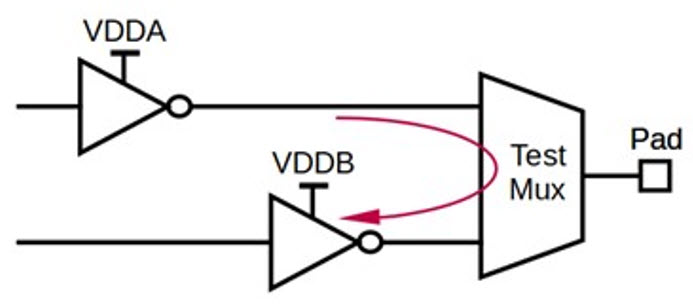
Quickly and accurately identify inter-domain leakage issues in IC designs

Sponsored by Siemens Digital Industries Software

Power domain leakage is a major IC reliability issue, often missed by traditional tools. This white paper describes challenges of identifying leakage, types of false results, and presents Siemens EDA’s Insight Analyzer. The tool proactively finds true leakage paths, filters out false positives, and helps circuit designers quickly fix risks—enabling more robust, reliable chip designs. With detailed, context-aware analysis, designers save time and improve silicon quality.

Click to read more

featured chalk talk

GaN for Humanoid Robots
Sponsored by Mouser Electronics and Infineon
In this episode of Chalk Talk, Eric Persson and Amelia Dalton explore why power is the key driver for efficient and reliable robot movements and how GaN technologies can help motor control solutions be more compact, integrated and efficient. They also investigate the role of field-oriented control in humanoid robotic applications and why the choice of a GaN power transistor can make all the difference in your next humanoid robot project!
Apr 20, 2026
10,166 views