fresh bytes
Subscribe Now

Nanoscale observations lead to growing understanding of superconductivity

nanoscale.jpg

Superconductivity describes the state of certain materials when they conduct electric currents without any resistance. For superconductivity to develop, these materials generally have to be cooled to temperatures below roughly –140 °C, depending on the material. The family of materials that requires the least amount of cooling is known as cuprate superconductors. These compounds are therefore technologically interesting, but scientists are still working to understand the fundamental mechanism underlying superconductivity in these materials. In fact, determining what makes cuprate superconductors tick is one of the grand challenges in condensed-matter physics.

Now, an international research team, led by Yuhki Kohsaka and Hidenori Takagi from the RIKEN Advanced Science Institute, Wako, has provided fresh perspectives on the behavior of these systems (“Visualization of the emergence of the pseudogap state and the evolution to superconductivity in a lightly hole-doped Mott insulator”).
via nanowerk

Continue reading

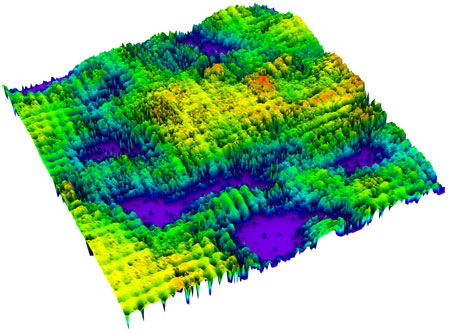
Image: This scanning-tunneling-spectroscopy image of Ca2-xNaxCuO2Cl2 shows the merging of
clusters (in green and yellow) where the so-called pseudogap state has developed.
(Image: Yuhki Kohsaka, RIKEN Advanced Science Institute)


Leave a Reply

featured blogs
May 6, 2026
Hollywood has struck gold with The Lord of the Rings and Dune'”so which sci-fi and fantasy books should filmmakers tackle next?...

featured paper

Want early design analysis without simulation?

Sponsored by Siemens Digital Industries Software

Traditional verification methods are failing today's complex IC designs, which require a proactive, early-stage analysis approach. A shift-left methodology addresses IP block integration challenges and the limitations of traditional simulation and ERC tools. Insight Analyzer detects hard-to-find leakage issues across power domains, enabling early analysis without full simulation. Identify inefficiencies earlier to reduce rework, improve reliability, and enhance power performance.

Click to read more!

featured chalk talk

Analog Output, Isolated Current, & Voltage Sensing Using Isolation Amplifiers
Sponsored by Mouser Electronics and Vishay
In this episode of Chalk Talk, Simon Goodwin from Vishay and Amelia Dalton chat about analog output, and isolated current and voltage sensing using isolation amplifiers. Simon and Amelia also explore the fundamental principles of current and voltage sensing and the variety of voltage and current sensing solutions offered by Vishay that can get your next design up and running in no time.
Apr 27, 2026
18,246 views