fresh bytes
Subscribe Now

MIT’s self-assembling chair is cool, but you can’t sit on it yet

Screen_Shot_2015-02-19_at_10.32.20_AM.png

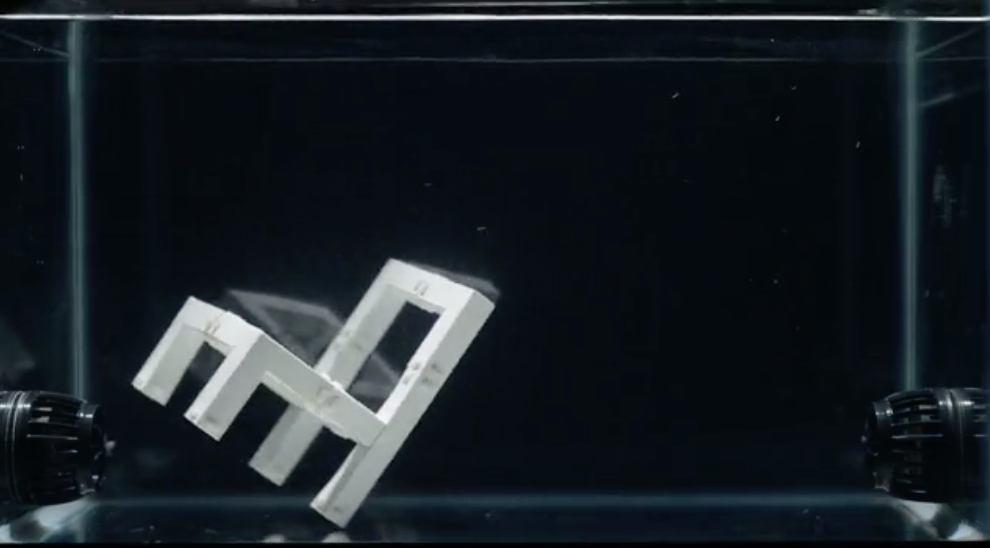
We’ll know we’re living in the future when our furniture can assemble itself at will. It’s something that MIT and others are working on, and the most recent work from the university’s self-assembly lab shows how far the process has come. Before you chuck that IKEA catalog, however, you should probably be aware of one small thing: the self-assembling chair you see before you is just 15cm tall. Also, it’s clearly submerged in water, so it’s not very practical unless you’re furnishing a new condo in Atlantica.

On paper, the idea sounds reasonably simple: the six component parts are thrown into a water bath with a pair of fans in the bottom. The motions cause the pieces to interact with each other, and each one has a magnet set at a different strength that should only join with its corresponding piece. All you have to do is keep the pieces in motion long enough for physics to take its course, and you have a chair. Unfortunately, while the whole thing looks cool and quick in the video, assembly actually took seven hours.
via Engadget


Continue reading 

Leave a Reply

featured blogs
Apr 24, 2026
A thought experiment in curiosity, confusion, and cosmic consequences....

featured paper

Quickly and accurately identify inter-domain leakage issues in IC designs

Sponsored by Siemens Digital Industries Software

Power domain leakage is a major IC reliability issue, often missed by traditional tools. This white paper describes challenges of identifying leakage, types of false results, and presents Siemens EDA’s Insight Analyzer. The tool proactively finds true leakage paths, filters out false positives, and helps circuit designers quickly fix risks—enabling more robust, reliable chip designs. With detailed, context-aware analysis, designers save time and improve silicon quality.

Click to read more

featured chalk talk

GaN for Humanoid Robots
Sponsored by Mouser Electronics and Infineon
In this episode of Chalk Talk, Eric Persson and Amelia Dalton explore why power is the key driver for efficient and reliable robot movements and how GaN technologies can help motor control solutions be more compact, integrated and efficient. They also investigate the role of field-oriented control in humanoid robotic applications and why the choice of a GaN power transistor can make all the difference in your next humanoid robot project!
Apr 20, 2026
4,007 views