

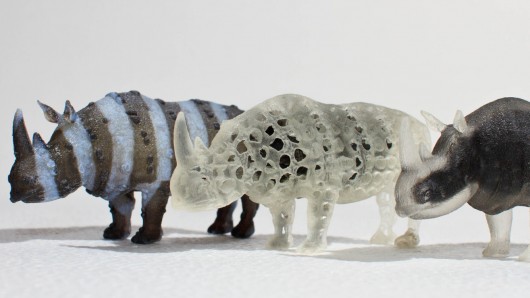
Until now, 3D printing an object with multiple materials meant giving the printer a very high-resolution image that specified the type of material to be used for each particular section. Throw in differences in texture, size, color and surface properties and you have a computational nightmare that can involve storing and processing petabytes of data to print even a small object.
To simplify the whole process, the CSAIL team created a software pipeline architecture that’s similar to the rendering pipeline used by the movie industry to create 3D images. Called “OpenFab,” the new streamlined process uses special programs called “fablets,” which are similar to shaders used in rendering, to specify changes in the material composition and geometry of each layer to be printed.
via Gizmag
Image: MIT Computational Fabrication Group






