fresh bytes
Subscribe Now

MIT finally figured out how to remove your reflection from window photos

1247741676540407113.jpg

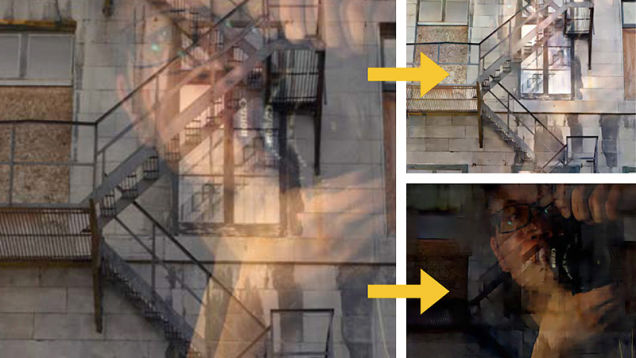
How often have you had a great photo-op ruined by there being a window in-between you and your subject resulting in reflections in your shot? So far there’s just no easy way to fix that in post-production, but researchers at MIT, led by YiChang Shih, have developed an algorithm that can extract and automatically remove reflections in an image.

There is a catch, though. The algorithm that Shih developed, while completing his PhD in computer science at MIT, relies on the window producing the reflection to be double-paned, or very, very thick. Why is that important? A double-pane window actually ends up producing two slightly offset reflections that Shih’s algorithm can use to extract what parts of the image are an unwanted reflection, and subsequently apply corrections to remove it. The technique works with thicker windows as well because of the distance between the outer and inner surfaces of the glass that also produce two misaligned reflections.
via Gizmodo

Continue reading 

Image: MIT

Leave a Reply

featured blogs
Apr 2, 2026
Build, code, and explore with your own AI-powered Mars rover kit, inspired by NASA's Perseverance mission....

featured paper

Quickly and accurately identify inter-domain leakage issues in IC designs

Sponsored by Siemens Digital Industries Software

Power domain leakage is a major IC reliability issue, often missed by traditional tools. This white paper describes challenges of identifying leakage, types of false results, and presents Siemens EDA’s Insight Analyzer. The tool proactively finds true leakage paths, filters out false positives, and helps circuit designers quickly fix risks—enabling more robust, reliable chip designs. With detailed, context-aware analysis, designers save time and improve silicon quality.

Click to read more

featured chalk talk

GaN for Humanoid Robots
Sponsored by Mouser Electronics and Infineon
In this episode of Chalk Talk, Eric Persson and Amelia Dalton explore why power is the key driver for efficient and reliable robot movements and how GaN technologies can help motor control solutions be more compact, integrated and efficient. They also investigate the role of field-oriented control in humanoid robotic applications and why the choice of a GaN power transistor can make all the difference in your next humanoid robot project!
Apr 20, 2026
703 views