

fresh bytes
Subscribe Now

Materials trick might help move computers beyond silicon

ferroelectricx299.jpg

After decades of repeated reinvention, the silicon transistor is starting to show its age, and the industry is hunting for alternatives. One option involves a new way of manipulating the properties of a material that the computer industry already uses. If it works, it would lead to computer processors that are not only more energy-efficient but also capable of both computation and memory storage at once.

With some tinkering, researchers found that they could make ferroelectric materials—widely used to store data using an electrical charge—switch rapidly between four different states. A transistor made of the material could use those states to represent more than the 1s and 0s that are the basis of today’s digital logic; it could hold each state without the need for an external power source; and it might be able to process information as well as store it.
via Technology Review

Continue reading 

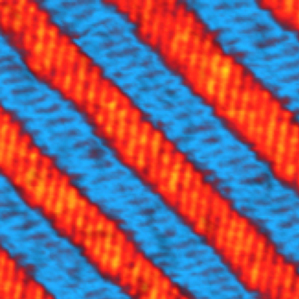
Image: Growing ferroelectric materials in a herringbone pattern, as shown in this colorized image,
may make them suitable for use as transistors.


Leave a Reply

featured blogs
Apr 24, 2026
A thought experiment in curiosity, confusion, and cosmic consequences....

featured paper

Quickly and accurately identify inter-domain leakage issues in IC designs

Sponsored by Siemens Digital Industries Software

Power domain leakage is a major IC reliability issue, often missed by traditional tools. This white paper describes challenges of identifying leakage, types of false results, and presents Siemens EDA’s Insight Analyzer. The tool proactively finds true leakage paths, filters out false positives, and helps circuit designers quickly fix risks—enabling more robust, reliable chip designs. With detailed, context-aware analysis, designers save time and improve silicon quality.

Click to read more

featured chalk talk

Connecting the World Through Space
Sponsored by Mouser Electronics and Qorvo
In this episode of Chalk Talk, Ryan Jennings from Qorvo and Amelia Dalton explore the critical components and design challenges inherent in LEO satellite infrastructure and how Qorvo’s solutions are enabling the next generation of space-based connectivity. 
Mar 30, 2026
26,970 views




