

fresh bytes
Subscribe Now

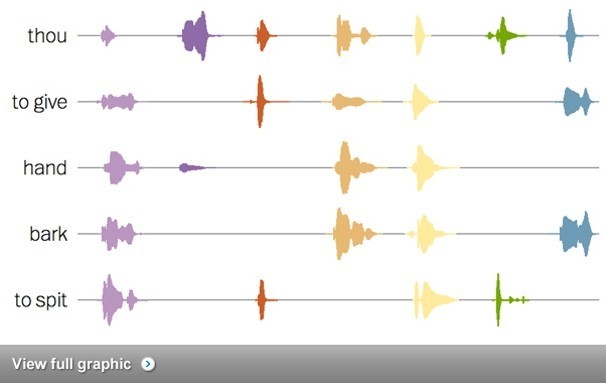
Linguists identify 15,000-year-old ‘ultraconserved words’

words-606-2--606x404.jpg

The traditional view is that words can’t survive for more than 8,000 to 9,000 years. Evolution, linguistic “weathering” and the adoption of replacements from other languages eventually drive ancient words to extinction, just like the dinosaurs of the Jurassic era.

A new study, however, suggests that’s not always true.

A team of researchers has come up with a list of two dozen “ultraconserved words” that have survived 150 centuries. It includes some predictable entries: “mother,” “not,” “what,” “to hear” and “man.” It also contains surprises: “to flow,” “ashes” and “worm.”
via The Washington Post


Continue reading 

Leave a Reply

featured blogs
May 6, 2026
Hollywood has struck gold with The Lord of the Rings and Dune'”so which sci-fi and fantasy books should filmmakers tackle next?...

featured paper

Quickly and accurately identify inter-domain leakage issues in IC designs

Sponsored by Siemens Digital Industries Software

Power domain leakage is a major IC reliability issue, often missed by traditional tools. This white paper describes challenges of identifying leakage, types of false results, and presents Siemens EDA’s Insight Analyzer. The tool proactively finds true leakage paths, filters out false positives, and helps circuit designers quickly fix risks—enabling more robust, reliable chip designs. With detailed, context-aware analysis, designers save time and improve silicon quality.

Click to read more

featured chalk talk

What’s Driving Zephyr’s Momentum
In this episode of Chalk Talk, Brendon Slade from NXP and Amelia Dalton explore what Zephyr makes unique, how it compares to other RTOS options, and how its design philosophy enables developers to scale from simple prototypes to production-ready systems with confidence.
May 4, 2026
9,979 views




