fresh bytes
Subscribe Now

LED lights are ruining laundry detergent’s white-brightening trick

light.jpg

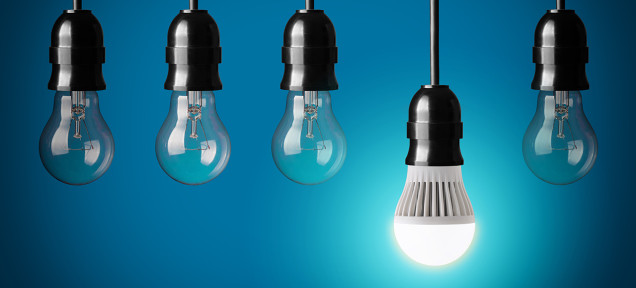
LED lighting is great. The right bulb gives the same warm incandescent glow you love from a fraction of the energy. But there’s a downside: while LEDs make cities look awesome, the most common type of LED lighting dims the ultraviolet trick laundry detergents use to make white clothes look whiter. The future is bright, but it’s also kind of dingy.

There’s some fascinating science going on here. Many laundry detergents contain fluorescent whitening agents, or FWAs, which absorb ultraviolet light and re-emit it as a visible blue wavelength. This slightly bluish tinge helps overpower the yellowish hue of, say, a well-worn undershirt, making that nasty old rag look radiant and white.

Unfortunately, most of the commonly-available LED lighting today emits little or no light in the ultraviolet part of the spectrum. And as a research team led by Penn State’s Dr. Kevin Houser discovered, that makes FWAs pretty much useless.
via Gizmodo

Continue reading 

Leave a Reply

featured blogs
Apr 24, 2026
A thought experiment in curiosity, confusion, and cosmic consequences....

featured paper

Quickly and accurately identify inter-domain leakage issues in IC designs

Sponsored by Siemens Digital Industries Software

Power domain leakage is a major IC reliability issue, often missed by traditional tools. This white paper describes challenges of identifying leakage, types of false results, and presents Siemens EDA’s Insight Analyzer. The tool proactively finds true leakage paths, filters out false positives, and helps circuit designers quickly fix risks—enabling more robust, reliable chip designs. With detailed, context-aware analysis, designers save time and improve silicon quality.

Click to read more

featured chalk talk

Analog Output, Isolated Current, & Voltage Sensing Using Isolation Amplifiers
Sponsored by Mouser Electronics and Vishay
In this episode of Chalk Talk, Simon Goodwin from Vishay and Amelia Dalton chat about analog output, and isolated current and voltage sensing using isolation amplifiers. Simon and Amelia also explore the fundamental principles of current and voltage sensing and the variety of voltage and current sensing solutions offered by Vishay that can get your next design up and running in no time.
Apr 27, 2026
2,383 views