fresh bytes
Subscribe Now

Kepler telescope introduces Earth to a very distant cousin

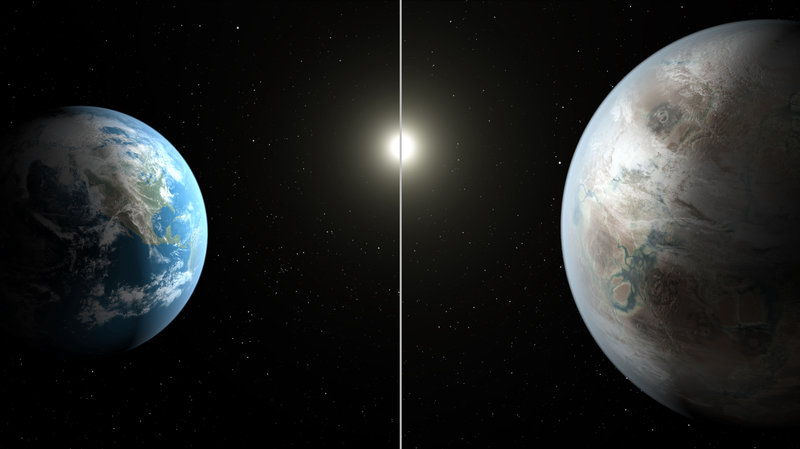
452b_artistconcept_comparisonwithearth_wide-4813fcf5e254015c204da2bcb454a7322919c146-s800-c85.jpg

NASA’s planet-hunting Kepler Telescope has spotted the first roughly Earth-sized world orbiting in the “Goldilocks zone” of another star – offering perhaps the best bet so far for life elsewhere in the universe.

A year on Kepler-452b, which is about 1,400 light years from us in the constellation Cygnus, is 385 days, meaning its orbit is just a bit farther away from its star than the Earth is from the sun. That places it squarely within what planetary scientists call the habitable zone, or “Goldilocks” zone — not too cold and not too hot.
via NPR


Continue reading 

Leave a Reply

featured blogs
Apr 2, 2026
Build, code, and explore with your own AI-powered Mars rover kit, inspired by NASA's Perseverance mission....

featured paper

Quickly and accurately identify inter-domain leakage issues in IC designs

Sponsored by Siemens Digital Industries Software

Power domain leakage is a major IC reliability issue, often missed by traditional tools. This white paper describes challenges of identifying leakage, types of false results, and presents Siemens EDA’s Insight Analyzer. The tool proactively finds true leakage paths, filters out false positives, and helps circuit designers quickly fix risks—enabling more robust, reliable chip designs. With detailed, context-aware analysis, designers save time and improve silicon quality.

Click to read more

featured chalk talk

Connecting the World Through Space
Sponsored by Mouser Electronics and Qorvo
In this episode of Chalk Talk, Ryan Jennings from Qorvo and Amelia Dalton explore the critical components and design challenges inherent in LEO satellite infrastructure and how Qorvo’s solutions are enabling the next generation of space-based connectivity. 
Mar 30, 2026
22,275 views