fresh bytes
Subscribe Now

How to write like a scientist

I didn’t know whether to take my Ph.D. adviser’s remark as a compliment. “You don’t write like a scientist,” he said, handing me back the progress report for a grant that I had written for him. In my dream world, tears would have come to his eyes, and he would have squealed, “You write like a poet!”

In reality, though, he just frowned. He had meant it as a criticism. I don’t write like a scientist, and apparently that’s bad.

I asked for an example, and he pointed to a sentence on the first page. “See that word?” he said. “Right there. That is not science.”

The word was “lone,” as in “PvPlm is the lone plasmepsin in the food vacuole of Plasmodium vivax.” It was a filthy word. A non-scientific word. A flowery word, a lyrical word, a word worthy of — ugh — an MFA student.
via Science Careers

Continue reading 

Leave a Reply

featured blogs
May 6, 2026
Hollywood has struck gold with The Lord of the Rings and Dune'”so which sci-fi and fantasy books should filmmakers tackle next?...

featured paper

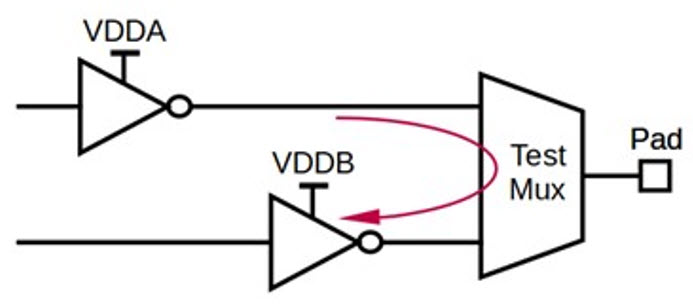
Quickly and accurately identify inter-domain leakage issues in IC designs

Sponsored by Siemens Digital Industries Software

Power domain leakage is a major IC reliability issue, often missed by traditional tools. This white paper describes challenges of identifying leakage, types of false results, and presents Siemens EDA’s Insight Analyzer. The tool proactively finds true leakage paths, filters out false positives, and helps circuit designers quickly fix risks—enabling more robust, reliable chip designs. With detailed, context-aware analysis, designers save time and improve silicon quality.

Click to read more

featured chalk talk

What’s Driving Zephyr’s Momentum
In this episode of Chalk Talk, Brendon Slade from NXP and Amelia Dalton explore what Zephyr makes unique, how it compares to other RTOS options, and how its design philosophy enables developers to scale from simple prototypes to production-ready systems with confidence.
May 4, 2026
18,045 views